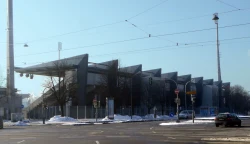
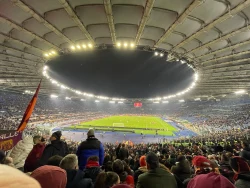
Estadio Único Diego Armando Maradona: La Plata’s event arena
In La Plata, the Estadio Único Diego Armando Maradona is not simply a football ground. It is a provincial venue for sport and cultural events, set within landscaped grounds and designed to move large audiences through separate entrances and stands. The official stadium agency describes football dressing rooms, press rooms, hospitality boxes and an adjoining open-air event area, while its access guide maps routes from Buenos Aires and within La Plata. For a traveler, the key distinction is that this is a working event venue, not a museum with guaranteed daily admission: check what is scheduled and confirm access before making a special trip.
A provincial project with a public role
The stadium is managed by the Estadio Único Diego Armando Maradona Administrative Agency, which operates under the government of Buenos Aires Province. The agency’s institutional page says it was created on 22 August 2008 to plan and manage the provincial dome, its use and maintenance, and an annual programme of activities. A separate foundation, established on 21 April 1992, brought together representatives of La Plata’s two major football clubs, Estudiantes and Gimnasia y Esgrima, to advance the stadium project. The arrangement helps explain why the venue is both public infrastructure and closely connected to the city’s football culture.
The stadium’s official name now honours Diego Armando Maradona, but its role reaches beyond a single club or match. The provincial site presents it as a place for sporting and cultural events and for community activities. Its history is therefore best read through its changing public uses: a large shared arena can host football, concerts, exhibitions and civic gatherings, while its calendar determines when visitors can enter. The official news page, rather than an old travel listing, is the useful place to look for announced events.
Inside the dome and across the grounds
The venue’s official facilities page describes four football-team dressing rooms arranged beside the two tunnels leading to the field. Each has team-support spaces, and the home dressing room connects to the press room. There are also two referees’ dressing rooms, medical and anti-doping rooms, a press-conference area, hospitality spaces and 182 boxes around the upper level. These details are not normally a promise of a public tour; they show the scale of the infrastructure required to stage professional sport and large events.
The grounds cover 36 landscaped hectares, according to the stadium agency. They include vehicle parking and Punto Único, a separate outdoor event area that the official site says can accommodate up to 20,000 spectators. This distinction matters when checking a ticket: a concert or festival may use the surrounding grounds rather than the football bowl, with a different entrance and layout. The agency lists several gates around Avenues 24, 25, 32 and 528, while stand sections have their own approaches and dispersal routes.
What a visitor can and cannot assume
The official website describes accessible provision for visitors with reduced mobility. At sporting events, it identifies a designated area for disabled spectators and companions, reached by lift; ramps connect the stadium’s internal access points. The exact arrangements depend on the event and ticket, so visitors who need step-free access or a companion place should contact the event organizer and verify the designated gate in advance. A general description of accessible infrastructure cannot guarantee that every event uses the same seating plan.
The stadium site does not publish a fixed daily sightseeing schedule, standard admission price or standing programme of tours. Entry is therefore best planned around a named match, concert, exhibition or other public activity. Event organizers set ticket sales, opening times, security rules and permitted entrances. If no event is listed for your dates, do not assume that the bowl or interior spaces are open to casual visitors; ask the provincial agency whether any public visit is available before travelling across the city.
Getting there and planning around an event
The official location page places the stadium at the intersection of Avenues 25 and 32. From Buenos Aires, it describes intercity bus services from the Once and Retiro areas to La Plata’s bus terminal and the Roca railway from Constitución station. It also lists local bus routes serving the stadium. Transport routes and event-day diversions can change, so confirm departures with the relevant operator and check the venue’s event notice for the gate and arrival plan printed on your ticket.
La Plata is worth treating as the destination, not just the last stop before the stadium. Build time into the visit for the city’s grid, central plazas and university architecture, then travel to the venue with enough margin for security checks and crowd movement. On a major event day, follow the organizer’s instructions rather than choosing an entrance from a map alone. The Estadio Único is most rewarding when experienced as a living civic arena: its architecture, public grounds and access system make sense together, but the event calendar—not a permanent tourist timetable—decides when the public can enter.