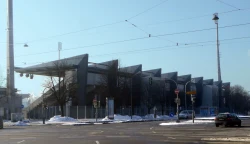
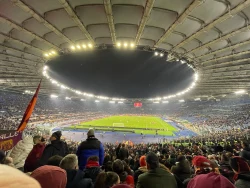
Ellis Park Stadium, Johannesburg: rugby history and visitor guide
Ellis Park Stadium is more than a rugby ground in Johannesburg’s Doornfontein district. It has hosted the Springboks’ 1995 Rugby World Cup triumph, football and rugby fixtures, and a fatal soccer disaster in 2001. That history gives the stadium a weight that newer arenas cannot acquire through architecture alone. Today, it remains an event venue, not a standard walk-in museum, so visitors should plan around a confirmed match or another officially announced event and check the organizer’s current entry conditions.
A Johannesburg sports ground with a civic history
The City of Johannesburg places Ellis Park in Doornfontein, east of the central business district, and identifies rugby union and association football as its principal sports. Municipal descriptions have used different sponsor-era names over time, but Ellis Park Stadium remains the clearest name for finding the venue. The surrounding precinct has long included other sports facilities, reinforcing the area’s identity as a cluster of stadiums and arenas rather than an isolated ground.
The site became nationally known through rugby, but it has hosted football as well. That dual use matters to the story of Johannesburg’s sporting public: supporters with different clubs and codes have shared the same stands and streets around the venue. Its urban setting is part of the experience. Rather than sitting in a remote suburban park, Ellis Park occupies a dense inner-city district, where transport, event security and match-day traffic are part of how a visit is organized.
Before the 2010 FIFA World Cup, Johannesburg upgraded Ellis Park as part of a wider programme to prepare the city’s venues. The city’s annual reporting described extensive renovation work and identified the stadium as a site for World Cup matches. This was not the creation of an entirely new venue; it was an effort to adapt an established ground for the technical, broadcast and spectator demands of an international tournament. The stadium’s history therefore carries layers of reuse: domestic rugby and football, a global football event, and later fixtures that return the ground to its regular sporting role.
The 1995 final: sport and national symbolism
The match most closely associated with Ellis Park took place on 24 June 1995. World Rugby records the Rugby World Cup final between South Africa and New Zealand at the Johannesburg stadium. The Springboks won 15–12 after extra time, in a game remembered as much for its setting as for its score. At the trophy presentation, President Nelson Mandela wore a Springbok jersey and handed the Webb Ellis Cup to captain Francois Pienaar. World Rugby describes that image as one of the defining moments in the sport’s history.
The scene resonated because the tournament marked South Africa’s return to international rugby after years of sporting isolation. The team’s victory and the televised exchange between Mandela and Pienaar became a widely recognized symbol of reconciliation at a moment when the country was building a new democratic order. The stadium did not create that political change, and one sporting event cannot represent every experience of the period. But Ellis Park became the physical setting for an image through which many people remember the possibility of a shared national future.
World Cup history continued at the venue in 2010, when Ellis Park formed part of Johannesburg’s FIFA tournament programme. The city had undertaken renovations so the ground could support international football and the demanding operations around it. Rugby remains central to its public identity, but the stadium’s World Cup role shows why it should not be described as a rugby-only site. Its schedule has crossed between football and rugby, bringing different audiences into the same urban precinct.
Remembering the 2001 tragedy with care
Ellis Park’s history also includes a devastating event. On 11 April 2001, a soccer match between Kaizer Chiefs and Orlando Pirates was abandoned after a crowd crush that killed 43 spectators. The South African government later marked the anniversary and summarized inquiry findings that included ticket overselling allegations and shortcomings in crowd control. This chapter must be remembered as a human tragedy, not as a dramatic anecdote or a footnote to a sports story.
The official commission of inquiry examined the events, the factors that led to the disaster and how similar incidents could be prevented. Its existence is part of the stadium’s institutional history: the tragedy prompted formal scrutiny of event management and public safety. For modern visitors, it is a reminder that a stadium experience depends on planning beyond the pitch—ticket controls, crowd movement, communication, security and emergency response all matter. Current event organizers publish their own safety and entry instructions, which spectators should read before arriving.
These contrasting chapters—an iconic rugby final and a deadly football disaster—show why a simple “famous stadium” label is inadequate. Ellis Park has been a place of celebration, shared identity and loss. A careful account recognizes the energy of major matches while refusing to detach the venue from the people who experienced its hardest day. That balance makes its sporting history more honest and more meaningful for visitors interested in the city, not only the result on the scoreboard.
Visiting Ellis Park: what travelers should know
The City of Johannesburg’s visitor listing places the stadium in Doornfontein. I found no current official schedule for routine public tours or daily admission to the stands. Published ticket conditions instead tie entry to the event named on the ticket and reserve the venue’s right of admission. The practical assumption should therefore be that you need a match or event ticket unless stadium management confirms a separate visit or tour. Do not travel expecting to walk into the seating bowl on an ordinary day.
For a match, buy through the team, event organizer or authorized ticketing channel named in the official notice. Read the specific stadium rules carefully: they may address ticket validity, restricted items, recording equipment, conduct and security checks. The published Ellis Park terms state that the ticket is for the event printed on it and must be retained for entry. Rules can be revised, and the organizer’s latest instructions take precedence over old screenshots, fan forums or general venue summaries.
Doornfontein’s central location does not guarantee an easy arrival on event day. Road closures, parking and any shuttle or public-transport arrangements are set for a particular fixture and can change. Check the event’s transport plan before setting out, arrive early enough for screening and avoid assuming that parking will be available at the gate. If you need accessible seating or assistance, contact the venue or ticket provider before buying, since availability and entry routes depend on the event configuration.
Ellis Park is most rewarding when approached as a living sports venue and a place with layered public memory. A match reveals the sound and intensity for which it is known; the 1995 final explains its international symbolism; and the 2001 disaster demands a more sober reflection on how crowds are protected. Check the fixture calendar, use current ticket and travel information, and give the venue’s history its full context. That is a better way to discover the stadium than treating its past as a collection of trivia.