The Dead Sea: salt, ancient landscapes and the changing line of the shore
A landscape whose waterline keeps moving
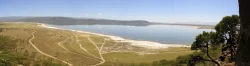
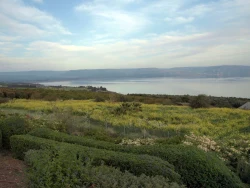
The Dead Sea is a lake with a name that suggests an ocean and a shoreline that refuses to stay fixed. It occupies a closed basin more than 400 metres below sea level, between desert slopes and the Jordan Valley. Its salt-rich water, pale deposits and distant escarpments create a distinctive landscape, but a photograph cannot explain everything visible there. Water use, mineral extraction and the changing ground along the margins are as important to its present identity as the celebrated buoyancy.
Jordan lies along the eastern side; Israel and the West Bank are on the western side. A description of the lake should not erase those different jurisdictions or imply that one set of entry arrangements applies to every shore. Regional security conditions also form part of the current context. This is an account of geography, heritage and environmental change, not a recommendation for a holiday journey while official advice counsels against or urges reconsideration of such travel.
High concentrations of dissolved salts help explain why the water feels different from ordinary seawater and why floating became central to the lake’s tourism image. That physical property is not a guarantee of safety, nor does it establish the health promises sometimes attached to mineral products and spa advertising. The landscape can be described accurately without turning a natural phenomenon into a medical recommendation or treating every stretch of shoreline as an authorised bathing place.
Read the surrounding history beyond the resort image
Above the western shore, Masada adds a different scale of history. UNESCO describes a palace-fortress built by Herod the Great in the Judean Desert, with surviving Roman siege works around the plateau. The relationship between elevated stronghold and low-lying lake helps explain the dramatic setting. It is a distinct archaeological property, however, not another name for the Dead Sea itself, and its historical significance does not depend on presenting the whole region as one uncomplicated sightseeing circuit.
The name also reaches far beyond the water through the Dead Sea Scrolls. The Israel Museum’s digital collection connects manuscripts to the Qumran cave discoveries, including the Great Isaiah Scroll found in 1947 and the Temple Scroll associated with a discovery in 1956. These objects concern ancient texts, their transmission and modern scholarship. Their online presentation allows a closer look at individual manuscripts without requiring a journey, and without confusing the original discovery locations with the museums that hold them.
On the Jordanian side, the Tourism Board places the lake within a wider cultural landscape that includes the nearby baptism site of Al-Maghtas and the Panorama Complex overlooking the basin. These references broaden the picture beyond pools and hotels. They should still be understood as separate places with their own administration and conditions. A regional introduction is not an assertion that every road, institution or attraction is currently operating normally.
Why the shore is retreating, and why the ground matters
The US Geological Survey’s satellite series follows the basin from the 1970s into 2024. Its explanation identifies reduced inflows, including water diverted from tributaries for irrigation, and the use of lake water in southern salt and potash evaporation ponds. The northern lake and the engineered southern ponds should not be read as identical water bodies in an aerial image. In a closed basin, the balance between water arriving and water lost has visible consequences.
The change also reaches below the surface. A geophysical study published in revised form in 2017 describes how fresher groundwater can dissolve buried salt as groundwater conditions change, allowing cavities and eventual surface collapse. This explains the formation of sinkholes; it does not provide a current count for 2026. Scientific observations need their dates, and a historical estimate should not be repeated as if researchers had just surveyed every hazardous part of the coast.
For anyone already in the area on an essential, permitted journey, that geology has a practical implication: old paths, abandoned facilities and apparently open ground are not reliable invitations to explore. Follow local closures and authorised access rather than an old beach marker or an attractive satellite view. The same image that makes the coast visually compelling can conceal instability. Environmental change is a condition affecting the landscape, not just a distant conservation theme.
A dated security context, and a future without easy promises
Checked on 29 October 2026, the US State Department’s Jordan advisory dated 23 October places the country at Level 3, Reconsider Travel. Canada’s Israel and Palestine advice, updated 29 July 2026, advises avoiding non-essential travel to Israel and Jerusalem and all travel to Palestine, with specified road exceptions. These are different advisories for different areas; none should be replaced by a blanket claim that the entire Dead Sea region is currently a safe leisure destination.
The UK’s Jordan advice, updated 27 October 2026, also describes deeply unpredictable regional tensions and the possibility of flight cancellations, airspace closures and other disruption. Travellers needing essential movement must check the advice relevant to their circumstances and obey local instructions. A hotel listing or tourism promotion does not override those warnings. This article therefore gives no current leisure itinerary, border-crossing promise, fixed attraction timetable or unverified admission price.
The lake’s future is better understood through water management, scientific monitoring and the care of the surrounding heritage than through an easy promise that one project will restore it. Compare dated satellite images, examine the digital manuscripts and read the archaeological record alongside the environmental evidence. The Dead Sea remains a remarkable landscape precisely because its geology and human history are inseparable. Understanding those connections is valuable even when an ordinary tourist visit is not something to recommend.