DHL Stadium in Cape Town: World Cup history and visitor guide
Between Signal Hill and the Atlantic, DHL Stadium gives Cape Town a striking sports landmark in Green Point. The present venue was completed in 2009 for the 2010 FIFA World Cup; it has since hosted rugby, international tournaments, concerts and large public gatherings. Its identity has changed with the city around it: the setting is an old shared recreation ground, the building is a twenty-first-century arena, and its current commercial name dates from a 2021 partnership. Travelers can book a guided tour, including an optional roof walk, but should not mistake the stadium for a museum with general walk-in hours.
Green Point before the modern stadium
The present arena is part of the Green Point precinct, whose redesign accompanied the 2010 project. The City of Cape Town describes the adjacent Green Point Park as part of this stadium area and lists a biodiversity garden, outdoor labyrinth, play spaces, wetland garden and open lawns among its features. That gives visitors a way to combine a stadium stop with a public outdoor space. The park and the stadium are distinct facilities, however: a walk through the park does not provide access to the stands or the roof.
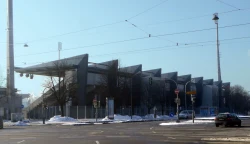
Construction of the new stadium was completed in 2009, ahead of the competition. The location places it within a landscape of sea, mountain and city rather than in an isolated sports complex. Green Point Park lies beside the venue, and the wider area connects with the Atlantic Seaboard and the V&A Waterfront. This makes the stadium legible as part of Cape Town’s urban fabric even on days when no match is being played: its scale and curved exterior contrast with the open parkland around it.
The stadium operator presents DHL Stadium as a multifunctional venue for major sports events, concerts and festivals, and also markets spaces for business events, conferences, exhibitions and filming. That combination explains why there is no single daily visitor routine. The event calendar determines whether the public enters as spectators, tour guests or invited attendees, and the configuration of the venue can change from one production to another.
Eight World Cup matches and a life after 2010
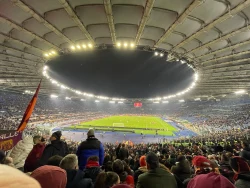
In 2010, Cape Town Stadium hosted eight FIFA World Cup matches, according to the City’s account of the tournament. The new arena gave Cape Town a purpose-built stage for a global event and became one of the most visible pieces of the city’s World Cup legacy. The tournament’s effects reached beyond the stands: municipal reporting records the stadium shuttle and the “Fan Walk” that connected the city centre with Green Point during match days. Those arrangements were designed for that tournament, however, and should not be treated as a current transport promise for every future event.
The stadium continued to build a varied event history after the final whistle. Its official timeline names the 2011 U2 360 Tour as the first concert held there and records Nelson Mandela’s memorial event in 2013. In 2020 it hosted the “Match in Africa,” a tennis exhibition featuring Roger Federer and Rafael Nadal, alongside Trevor Noah and Bill Gates; the operator describes it as a world-record attendance for a single tennis match. These events show how the venue can shift from rugby or football to music and one-off spectacles without changing its role as a gathering place.
The name on the gates also tells a recent story. It opened as Cape Town Stadium and, after a naming-rights partnership secured in 2021, became DHL Stadium. Older maps, travel blogs and some event materials may still use “Cape Town Stadium” or “Green Point Stadium.” These names can help identify the same Green Point venue, but the old Green Point Stadium that preceded the World Cup construction should not be confused with the present building. When searching for current tours or contact details, use the DHL Stadium name and its official site.
Visiting the stadium: tours, tickets and access
The operator offers a guided stadium tour that takes visitors through areas normally closed to general spectators, including the player tunnel, changing rooms, pitch-side sections, media areas and hospitality spaces. It also describes a visit to the stadium roof as an optional addition. The exact route, available dates and prices can change, and the online tour page is the appropriate place to check before booking. A tour is a separate experience from attending a match or concert; it does not grant entry to an event taking place that day.
The published address is Fritz Sonnenberg Road, Green Point, Cape Town 8051. The municipal transport network serves the city’s major attractions and event venues, but match-day routes, parking arrangements and road closures depend on the event plan. The stadium operator explicitly says it does not sell tickets or parking for events on behalf of organizers. Buy through the event organizer or its authorized ticketing partner, and use the travel instructions on that event’s notice rather than assuming that ordinary transport schedules will be unchanged.
Green Point Park is immediately adjacent to the stadium and is a separate public-space destination. Its presence helps explain the precinct’s original public-recreation purpose and gives visitors a way to appreciate the building from outside without entering a ticketed event. Park access, operating conditions and temporary closures are managed separately from the stadium. A visit to the park therefore should not be confused with access to the interior or the roof.
For a match or concert, check the event’s gate-opening time, permitted-bag policy, accessibility arrangements and transport plan. Stadium rules can be event-specific, and crowd controls may affect roads in Green Point. If you need step-free access, accessible seating or other assistance, contact the organizer or venue before purchasing tickets. Arriving early is useful not only for security checks but also because surrounding routes can become busy as spectators converge on the precinct.
For a first-time visitor, the best approach is to decide whether the goal is architecture, sport or a live event. A booked tour reveals the backstage functions and can add the roof experience; a match or concert places the structure in its most animated setting; and the nearby park offers a public view without an event ticket. DHL Stadium is compelling because those layers coexist: a former common with a long recreation history, a World Cup venue, a contemporary event business and a recognisable part of Cape Town’s coastal landscape.