About Cajamarca
A northern Andean city with a layered past
Cajamarca sits in Peru’s northern highlands and is known for a historic centre where Andean and colonial histories meet. The city is often introduced through one dramatic episode: on November 16, 1532, Spanish forces led by Francisco Pizarro captured the Inca ruler Atahualpa in Cajamarca. The account of his imprisonment, the offer of gold and silver for his release, and his execution is central to how the city is remembered. It should be read as a story of invasion and political rupture, not as a romantic legend detached from the violence of conquest.
The modern city offers more than that turning point. The provincial municipality notes that the region had been incorporated into the Inca realm before the Spanish arrival and that colonial urban development later adapted the earlier settlement into a grid. In 1549, Franciscan friars gave the town the name San Antonio de Cajamarca. Today, the main plaza, churches, historic houses and museums make the centre walkable, while archaeological and natural sites lie beyond the urban area. Allow time for both, rather than treating Cajamarca as a brief stop between excursions.
Plaza de Armas and the Ransom Room
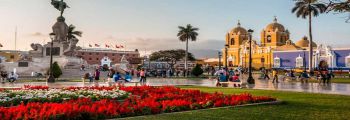
The Plaza de Armas is a natural starting point. The municipal history places Atahualpa’s capture where the present-day plaza stands and describes the ransom offer as a room to be filled with gold and twice with silver. The nearby Cuarto del Rescate, or Ransom Room, is presented by the regional tourism authority as an important surviving example of Inca stone architecture in the city and as the place associated with Atahualpa’s imprisonment. The familiar story gives the room a powerful historical resonance, but visitors should keep its context in view: the ransom did not secure his freedom.
From the plaza, look for the Cathedral of Santa Catalina and the Church of San Francisco, both listed among the city’s principal heritage attractions. The regional tourism portal describes the cathedral as a seventeenth-century landmark and identifies San Francisco as a major historic church with a religious-art museum and convent complex. Architectural details are best appreciated slowly: carved stone, façades, courtyards and the scale of the central square show how colonial institutions reshaped an older Andean urban centre. Access to worship spaces can vary with services and maintenance, so an exterior walk remains worthwhile even when an interior is closed.
Belén’s museum and practical opening information
The monumental Belén complex adds another layer to a central-city visit. The Ministry of Culture’s museum page says the archaeological and ethnographic museum opened in 1986 inside a viceregal-era stone building constructed by the Bethlemite order in the early eighteenth century. It has permanent archaeological and ethnographic rooms as well as temporary exhibitions. The collection includes pre-Hispanic ceramics, textiles, stone and metal objects, alongside materials connected with regional crafts, clothing, household life and Cajamarca’s carnival traditions.
The Ministry’s current listing gives the museum’s address as Jr. Belén 571 and its hours as Tuesday to Sunday, 9 a.m. to 1 p.m. and 2:30 to 6 p.m. It lists adult admission at S/5 and higher-education students at S/2, with free admission for specified children, school students, older adults and visitors with disabilities under the cited 2025 ministerial resolution. These terms belong to the museum, not automatically to every part of the Belén complex. Confirm the official listing before travel, particularly on a public holiday, and ask locally whether other rooms or religious buildings are open during your visit.
Day trips: Cumbemayo and Otuzco
Cumbemayo lies about 20 kilometres southwest of Cajamarca and is known for its pre-Inca hydraulic works and a landscape of weathered rock formations called Los Frailones. The regional government describes a visible section of the ancient aqueduct as roughly eight kilometres long. Reaching the site is a separate outing from the city centre; regional information notes road access and a final approach that may be unpaved. The government’s visitor-reservation portal currently displays Tuesday-to-Saturday access slots from 9:20 a.m. to 2:30 p.m. and a capacity limit. Another tourism listing still labels hours “to be defined,” so check the reservation page and local notices before arranging transport.
Ventanillas de Otuzco, northeast of the city, is an archaeological funerary site with niches cut into volcanic rock. Peru’s tourism inventory places it about eight kilometres from Cajamarca and records its recognition as a national cultural heritage site. The short distance does not mean travel time is fixed: traffic, weather and transport arrangements can change. A licensed local guide can help explain the burial landscape and keep a visit focused on the site rather than speculation. Do not climb on or mark the rock-cut structures, and follow any access rules posted by the cultural authorities.
What to check before you go
Opening information in Cajamarca is not uniform across attractions. The regional page for the Ransom Room lists Tuesday-to-Sunday hours of 8 a.m. to 1 p.m. and 3 p.m. to 6 p.m., but marks them “to be defined”; Cumbemayo also has provisional hours on one government page alongside a more specific reservation calendar. Treat those schedules as leads, not guarantees. Confirm same-day access with the relevant cultural or tourism office before leaving town, and leave enough time for lunch breaks and transport between sites.
For the historic centre, sturdy walking shoes, water and sun protection are useful. For a rural excursion, check road and weather conditions, book a reliable vehicle or tour, and agree on a return time before departure. Cajamarca’s highland setting can mean strong sun by day and cooler conditions later; dress in layers rather than assuming one temperature throughout the day. If visiting around a local celebration, expect changes to traffic and access and consult municipal announcements.
A visit beyond a single historical episode
Cajamarca’s name is inseparable from 1532, but a fuller visit connects the plaza and Ransom Room with the city’s colonial architecture, the Belén museum and the archaeological landscape beyond town. The official accounts themselves point to a more complex story: an important Andean centre before conquest, a violent encounter that altered political power, and a later city whose buildings and institutions reflect successive periods. Seeing these places together helps avoid reducing the region to one room or one story.
Plan the city on foot, reserve another half or full day for an outlying site, and verify each attraction’s access before you set off. Schedules and ticket conditions can change, and some official tourism pages are explicitly provisional. Cajamarca rewards visitors who allow time for context: its enduring interest lies in the way living streets, museum collections and ancient works of water and stone reveal different chapters of northern Peru’s history.