About Historic Centre of Trujillo
A city centre that is still a city
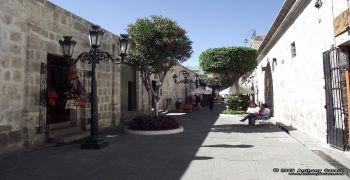
Trujillo’s historic centre is not a sealed colonial set. It remains part of a working northern Peruvian city, where civic offices, churches, museums, homes and shops meet around the Plaza de Armas. The plaza is the best place to orient a first walk: its open centre gives way to streets lined with historic façades, while the cathedral and municipal buildings help explain how public authority and religious life shaped the urban core.
The Ministry of Foreign Trade and Tourism’s inventory describes the monumental area as approximately 133.5 hectares. That figure helps explain why the historic centre is more than a single square or a handful of landmark houses. Its streets preserve a broader urban setting, including blocks and public spaces where architecture from the viceregal and republican periods sits within contemporary daily life. The important distinction for visitors is between a compact route through highlights and the much larger protected area.
Trujillo is also often described as a city of northern Peru’s independence story. On 29 December 1820, José Bernardo de Tagle, then intendant and later known as the Marqués de Torre Tagle, proclaimed the independence of the Intendancy of Trujillo from the cabildo site now occupied by the provincial municipality. The declaration was not Peru’s final independence, which came later, but it marked a consequential regional step and helps give the main square its historical resonance.
Reading the Plaza de Armas and its monuments
At the centre of the plaza stands the Monument to Liberty, a marble work by German sculptor Edmund Moeller, designed between 1921 and 1929 according to Peru Travel. Its allegorical form commemorates the independence movement rather than the colonial founding of the city. Seeing it in place makes the plaza legible as a layered civic landscape: the monument, surrounding buildings and public ceremonies belong to different moments, yet share the same open ground.
The cathedral is another natural point of attention. Peru Travel identifies it as a repository of viceregal-period art and recommends observing works kept inside. The yellow façade, visible from the plaza, contrasts with the quieter interiors of nearby churches such as San Agustín, Santo Domingo and San Francisco. Access to active religious buildings can be affected by services or local schedules, so treat a church visit as an opportunity rather than a guaranteed timed stop.
Historic houses and museums fill out the walk beyond the square. Peru Travel points visitors to the Toy Museum, Casa Calonge or Casa Urquiaga, and the archaeology, anthropology and history museum of the National University of Trujillo. Each offers a different lens: domestic objects and collecting, regional archaeology, or the evolution of local culture. These places are not interchangeable displays; choosing one or two according to interest can make a short visit feel more coherent.
Casa Urquiaga: a house that connects eras
Casa Urquiaga stands at Jirón Francisco Pizarro 446, facing the Plaza de Armas. The Central Reserve Bank of Peru says it acquired the colonial house in 1972 to turn it into a museum and preserve Trujillo’s memory. The building is associated with the Urquiaga family, whose ownership lasted more than 170 years, and its rooms now present objects that place a domestic interior within wider political and cultural changes.
The collection includes pre-Columbian ceramics, colonial paintings, republican portraits, coins and banknotes, as well as furniture and household objects. Together, these materials let visitors compare periods without reducing the house to a single date or owner. The museum’s account notes the family’s connection to Simón Bolívar and says the Liberator stayed in the house during the independence campaign, organizing part of the military effort there in 1824. This link gives the rooms a specific place in the story of the republic.
As of 8 October 2026, MUCEN’s official visitor page listed Trujillo opening Monday through Saturday, 9:15 a.m. to 5 p.m., at the Francisco Pizarro address; hours can change, so verify them again before a future visit. The museum also advertises mediated tours, an audio guide and group arrangements. Check its current page for any reservation or access conditions, especially if visiting with a group or planning around a particular programme.
Plan a thoughtful visit to central Trujillo
A practical walking sequence is to begin at the Plaza de Armas, spend time with the Monument to Liberty and cathedral, then follow Jirón Pizarro toward Casa Urquiaga and choose a museum based on your interests. Peru Travel also highlights the old water feature at Plazuela El Recreo and local dishes such as shámbar, cabrito with beans and northern-style fish stew. These are useful prompts, not a fixed itinerary; opening times and restaurant service vary.
For current museum hours, tours and entry arrangements, go directly to the institution’s official page. Peru Travel is helpful for orientation and major attractions, while Mincetur’s inventory explains the scope of the protected monumental area. Do not confuse Trujillo’s UNESCO status: UNESCO lists the Historic Center of the City of Trujillo on Peru’s Tentative List, entered in 1996, but it is not an inscribed World Heritage property. That precise distinction respects both the city’s heritage and the international designation system.
Allow time to notice the details between attractions: balconies, doorways, street proportions and the shifting colours of façades. The centre is both a monument zone and a place where residents work, worship and run errands. Keep pathways clear, ask before photographing people or entering private courtyards, and check whether a church is open before detouring. Trujillo rewards a slower route because its historical interest is not confined to one building; it emerges from how the square, houses, museums and present-day streets fit together.