Atatürk Olympic Stadium in Istanbul: football history and a landmark built for scale
A stadium shaped by Istanbul’s Olympic ambition
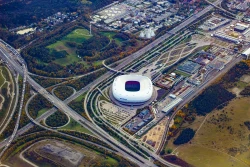
Atatürk Olympic Stadium rises on Istanbul’s western edge in Başakşehir, a part of the city where the scale of the venue feels different from the historic centre. The Turkish Football Federation traces the project to Istanbul’s Olympic bid: construction began in 1999 within a large Olympic Park, and the stadium was completed in 2002. Its opening match, on 31 July that year, was a friendly between Galatasaray and Olympiacos. The dates place the venue at the turn of a new century, when Istanbul was investing in facilities designed for international sport.
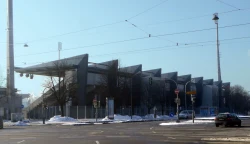
The stadium is named for Mustafa Kemal Atatürk, the founder of the Turkish Republic, and was conceived to host major football and athletics events. The federation identifies French architects Michel Macary and Aymeric Zublena as its designers. Its crescent-shaped roof above the west stand has become an especially recognizable feature. The architecture is not a delicate monument; it is a large civic arena whose dramatic proportions and open setting reflect its purpose as a mass-spectator venue.
For travelers, that location is part of the experience and a practical consideration. The stadium is far from the compact historic districts that many visitors associate with Istanbul, and it is not presented by its official pages as a daily museum or ordinary walk-in attraction. A visit should be planned around a scheduled match or event, with current access rules confirmed through the organizer. The outside appearance alone does not guarantee that gates, stands or interior spaces are open to the public.
The nights that made the stadium famous
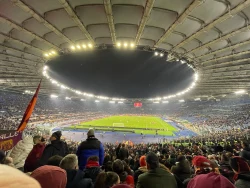
The venue’s most famous night came on 25 May 2005, when Liverpool and AC Milan met in the UEFA Champions League final. Milan led 3–0 at half-time, Liverpool drew level in the second half, and the English club won the penalty shoot-out after extra time ended 3–3. UEFA’s own retrospective calls the match an enduring part of the stadium’s identity. For football supporters, the place is tied not just to a final but to a reversal that became known around the world as the “Miracle of Istanbul.”
A second Champions League final was planned for 2020, but the COVID-19 pandemic forced UEFA to move that match to Lisbon; the 2021 final was staged in Porto. Istanbul’s stadium eventually hosted the competition’s final again on 10 June 2023. The return made the arena a European football landmark twice over, separated by eighteen years. The two occasions also show why event history can be more reliable than broad claims about the stadium as a tourist site: access is tied to the calendar of major fixtures, not to daily museum hours.
The stadium has also hosted Turkish Cup finals, Super Cup matches and club fixtures. Galatasaray played European matches there in the 2000s, and the federation’s record lists domestic finals across several seasons. Club use can change from year to year, so an old description of the home team should not be treated as a current schedule. Check the Turkish Football Federation, the club or the match organizer for the event actually taking place during your trip.
Renewal, sightlines and the modern match experience
Preparations for the postponed 2020 final brought extensive renovation. The Turkish federation reports that the pitch was renewed as a hybrid surface combining natural and synthetic grass. The athletics track was lowered so seats with obstructed views could better see the field; lighting, infrastructure, dressing rooms, hospitality areas and media facilities were also updated. UEFA later described the renovated venue as having a new hybrid pitch and overhauled floodlighting, alongside rebuilt rooms and lounges.
These changes matter because the building was originally conceived for both football and athletics. Lowering the track brought spectators closer to the action without changing the stadium’s identity as a broad Olympic-scale venue. The improvements also explain why photographs from different years can show a noticeably different relationship between pitch and stands. The roof and the west stand remain defining features, while the playing surface and interior facilities reflect more recent upgrades.
At a major match, the stadium becomes part of a much larger event operation involving ticket checks, security, transport plans and crowd management. Rules can differ between football fixtures, concerts and other bookings. Follow the instructions attached to the particular ticket, arrive with time to spare, and do not rely on transport information from an older final. The official pages consulted for this article do not provide a general visitor-tour timetable or a standing admission scheme for non-event days.
Planning a visit without assuming public access
Before travelling, establish whether an event is scheduled and whether tickets remain available through its official seller. A stadium match ticket is not interchangeable with a sightseeing pass, and access to the pitch, stands or hospitality areas may be restricted to designated ticket holders. If no event is taking place, contact the venue rather than assuming that the gates are open. No regular daily opening hours for casual visitors were listed on the official pages checked for this article.
On event days, use the organizer’s most recent directions for entry gates, prohibited items and transport. The venue sits in Başakşehir rather than the old city, so allow for a cross-city journey and possible congestion near the start and end of a fixture. Exact routes and services can change; check current Istanbul transit information and the event notice together. Do not plan a tight connection to an airport, ferry or another attraction immediately after the final whistle.
Atatürk Olympic Stadium is best understood through the contrast between ambition and atmosphere: a vast arena built for international-scale sport, and the intense intimacy that a full stand can create around one match. Its history includes the 2005 comeback final, a pandemic-delayed return in 2023 and a substantial modernization. Those facts make it compelling to football fans even when no ordinary visitor tour is available. For a worthwhile trip, confirm access first, treat dates and event rules as time-sensitive, and let the match—not an assumed daily opening—shape the plan.