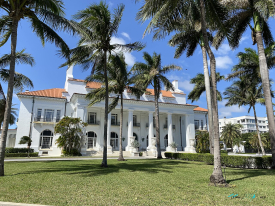
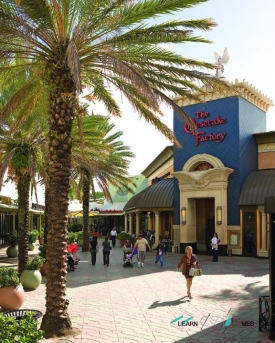
West Palm Beach faces Palm Beach across the Lake Worth Lagoon, but the two are distinct communities with different histories and identities. The city began on the mainland as a commercial and residential center for Henry Flagler’s resort hotels on the island. That origin still helps explain its character: West Palm Beach is not simply a beach town. Its downtown, waterfront, cultural institutions and neighborhoods form an urban destination with a history tied to Florida’s railroad expansion, tourism and regional commerce. The City of West Palm Beach records its incorporation on 5 November 1894, two years before Miami.
Palm Beach County History Online traces the city’s beginnings to Flagler’s 1892 visit to the Lake Worth area while he was planning to extend his railroad south. He developed the Royal Poinciana Hotel on Palm Beach in 1894 and the Palm Beach Inn, later called The Breakers, in 1896. The workers and services needed by the resorts prompted a mainland settlement across the lagoon. Flagler acquired property that became the nucleus of downtown, and the new town was laid out on a grid with plant names assigned to streets. Its early scale was modest: the first lots were auctioned in February 1894, and residents voted to incorporate that November.