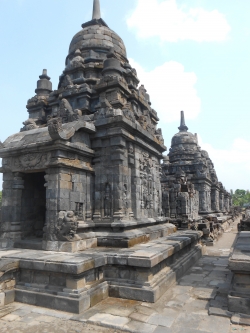
Prambanan is often introduced as a single dramatic Hindu temple east of Yogyakarta, but the name can refer to a wider landscape of archaeological compounds. The most visible monument is the towering shrine dedicated to Shiva, surrounded by temples associated with Brahma and Vishnu. Beyond that central group, the UNESCO property includes the nearby Buddhist compounds of Sewu, Bubrah and Lumbung. Understanding this distinction changes a visit: the skyline is only the beginning, and the broader site tells a story of religious architecture and political life in Java across several centuries.
UNESCO describes the Prambanan Temple Compounds as a group developed during the height of the Sailendra era, with monuments dating broadly from the eighth to tenth centuries. Indonesian heritage pages connect the main Prambanan complex with the Siwagrha inscription dated 856 CE. These dates refer to a long architectural history, not necessarily one construction campaign. The site lies in the Special Region of Yogyakarta, near the boundary with Central Java, and its setting reflects the shifting cultural and political geography of the ancient Mataram kingdom.