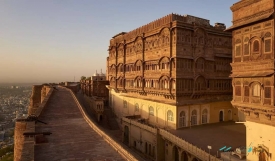
Jaisalmer Fort rises above the city in Rajasthan’s Thar Desert, its yellow sandstone changing tone with the light. Rajasthan Tourism calls it Sonar Qila, or the Golden Fort, and stresses a point that can be missed in a quick photograph: homes, shops, hotels and old havelis remain inside its walls, where generations of residents have continued to live. This is not simply a deserted monument preserved behind a gate. It is a historic urban quarter, and a visit works best when its residents are treated as neighbours rather than part of a display.
The state tourism account traces the city’s foundation to 1156, when Rawal Jaisal established a capital at the site now associated with the fort. Its published narrative also recounts a meeting with a sage and a prophecy about a descendant of Krishna founding a kingdom there. That episode belongs to the regional foundation tradition, not to a claim that can be independently proved as a literal event. Separating the documented date and ruler from the story’s legendary elements lets visitors appreciate both the political memory and the way local history has been told.