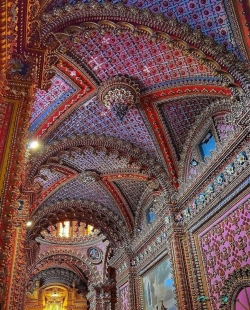
In Querétaro’s rugged Sierra Gorda, five Franciscan mission churches sit among mountain towns rather than within a single archaeological compound. Their richly decorated façades reward close attention, but the story is not simply one of architecture or a lone friar. The complexes emerged during the colonial evangelization of a region where Indigenous communities had resisted conquest for generations. UNESCO recognizes the missions as evidence of cultural encounter; a responsible visit also keeps the unequal power and contested history of that encounter in view.
The UNESCO property comprises Santiago de Jalpan and Nuestra Señora de la Luz de Tancoyol in the municipality of Jalpan de Serra; Santa María del Agua de Landa and San Francisco del Valle de Tilaco in Landa de Matamoros; and San Miguel Concá in Arroyo Seco. The sites are separated across the Sierra, so “the missions” means a regional itinerary, not five doors opening onto one courtyard. The UNESCO listing dates to 2003 and describes the churches as products of the mid-eighteenth-century phase of evangelization in inland Mexico.