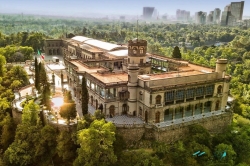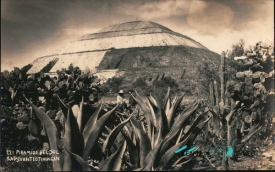
The Basilica of Our Lady of Guadalupe stands at the foot of Tepeyac Hill in the Gustavo A. Madero borough of Mexico City. It is not one church but a religious precinct whose buildings record successive moments of worship, construction and conservation. For Catholic pilgrims, the site is associated with the Guadalupe devotion and the tradition that Mary appeared to Juan Diego in 1531; that account belongs to religious tradition and should be described as such. For other visitors, the complex offers a way to understand how faith, architecture and Mexican public life have met at the same place for nearly five centuries. The modern basilica is the most visible landmark, but it is only one part of the visit.
The story of the buildings begins before the large eighteenth-century church that many visitors call the Old Basilica. The National Institute of Anthropology and History records earlier chapels and a sanctuary at Tepeyac, followed by the church designed by José Durán and Pedro de Arrieta and built from 1695 to 1709. Its consecration on May 1, 1709 marked a major architectural chapter in the precinct. The building later became a collegiate church and then a minor basilica. Its history is not simply a sequence of replacements: smaller chapels and devotional spaces continued to give the hillside a distinct religious geography.