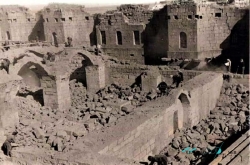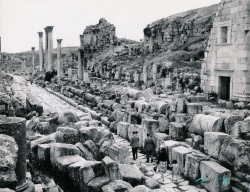
Far out in the volcanic plains of eastern Jordan, more than a hundred kilometres from the bustle of Amman, a low fortress of black basalt stands at the edge of an ancient oasis. This is Qasr Al-Azraq, the Blue Fortress, a structure whose name comes not from its sombre stones but from the sapphire pools that once made the surrounding desert habitable. Although it occupies far less imagined real estate than Petra or the citadels of the Hejaz, Al-Azraq Castle holds a unique place in Jordanian history: a single site that connects the Roman legions, the Umayyad caliphs, the Crusader-era Ayyubids, the Ottoman Empire, and one of the most romanticized figures of the twentieth century, T.E. Lawrence.
Located on the modern highway that runs east from Amman toward the Iraqi border, Al-Azraq is one of a string of so-called desert castles scattered across the basalt steppe, but it differs from its neighbours in significant ways. Where Qusayr Amra is famed for its Umayyad frescoes and Qasr Kharana for its enigmatic geometric design, Qasr Al-Azraq is unmistakably a fortress, square and military, built and rebuilt across nearly two thousand years for one essential purpose: to control the only reliable source of fresh water in roughly twelve thousand square kilometres of desert.