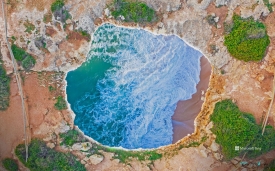
About Lulworth Cove
A sheltered curve on the Jurassic Coast
Lulworth Cove is a near-circular inlet beside West Lulworth in Dorset, on England’s south coast. Its pale pebble beach, enclosed water and steep green slopes make it one of the coast’s most recognisable views, but the shape is also a lesson in geology. The Lulworth Estate, which manages the visitor site, describes the cove as the result of the combined action of the sea and a river swollen by meltwater at the end of the last Ice Age. A short walk from the shore reveals further landforms that explain the area’s unusually varied coastline.
The cove lies within the Dorset and East Devon Coast World Heritage property, commonly known as the Jurassic Coast. UNESCO says the wider property exposes an almost continuous sequence of Triassic, Jurassic and Cretaceous rocks recording about 185 million years of Earth history. Its fossil localities and coastal landforms have contributed to earth-science research for more than three centuries. Lulworth is therefore both a popular seaside destination and a place where the visible cliffs and shoreline help tell a much longer story.
How the cove and nearby formations took shape
At Lulworth, layers of different rocks meet the sea at a distinctive angle. Softer clays and sands were eroded more quickly than resistant limestone, allowing waves to cut through the outer bands and widen the sheltered basin behind them. The estate highlights five rock types in the area and identifies the Lulworth Crumple and Stair Hole as notable formations. The result is not a static sculpture: erosion, rock falls and changing tides continue to modify this coast.
Stair Hole, just west of the cove, offers a more exposed view of the same geological forces. Its folded strata and developing opening are a reminder that coastal landforms evolve over time. The estate’s visitor centre explains the geology through displays and short films, while the wider World Heritage designation places this local example in a sequence extending along Dorset and Devon. Visitors can get more from the landscape by looking at the rock layers rather than treating the cove only as a photographic backdrop.
Walks, viewpoints and time by the water
The beach is reached from the village and visitor facilities, and the curving shoreline provides a close view of the cove’s enclosed form. From the higher paths, walkers can look back over the bay and continue along sections of the Jurassic Coast toward other landmarks, including Durdle Door. These routes are scenic but not uniformly easy: the estate warns that paths can be steep and occasionally unstable. Wear suitable footwear, allow time for the return climb and check conditions before setting out on a longer coastal walk.
Swimming and rock-pooling are among the activities visitors consider, and the estate says swimming is possible from its beaches except at Stair Hole. Conditions at sea can change quickly, however. The estate warns of steep cliffs, sharply shelving beaches and currents and asks visitors to follow local safety notices. A sheltered-looking bay should not be mistaken for risk-free water. Check the tide and weather, stay within marked or advised areas and supervise children closely near the water and cliff edges.
Visitor centre, access and current parking
The free Lulworth Cove Visitor Centre is a useful first stop for tide information, local maps and context about the landscape. The estate currently lists daily opening from 10:00 to 17:00, with a 16:00 closing time in winter, and closure on Christmas Day. Its exhibits trace the area’s geology from the formation of the first rocks around 150 million years ago to the coast seen today. The centre is wheelchair accessible, and the estate says an off-road Tramper mobility scooter can be booked by calling 01929 400587.
The estate’s plan-your-visit information gives the sat-nav postcode BH20 5RQ for Lulworth Cove, West Lulworth. The car park is pay-and-display, and its tariff page, checked for this guide on 5 October 2026, lists £9 for up to three hours, £17 for up to six, £25 for up to nine and £32 for stays of nine hours or more. Motorbike and coach rates differ; some large vehicles and cars towing caravans cannot use the cove car park. Prices can change, so check the estate’s parking page before setting off. The estate says parking income helps maintain footpaths, steps and beach access.
Fossils, conservation and a more thoughtful visit
The coast’s geological importance comes with responsibilities. The Lulworth Estate advises fossil hunters to keep away from cliff faces because rock falls can happen at any time, and to look on the beach where the sea has exposed softer material. Search only on a falling tide so waves do not cut off the route back. The estate explicitly says not to hammer into cliffs and asks visitors to leave rocks and stones where they are. Scientifically important finds should be reported to the Visitor Centre rather than removed without consideration.
UNESCO describes the Jurassic Coast as a dynamic shoreline where erosion and mass movement continue to expose rock and create landforms. That changing character is part of the site’s scientific value, not a reason to approach unstable edges. Use established paths, take litter home or use bins, and respect signs and temporary closures. Parking charges help fund the visitor infrastructure and conservation work, while careful behaviour helps protect the experience for residents, researchers and future visitors.
Why Lulworth Cove deserves more than a quick photograph
Lulworth Cove is compact enough for a short visit yet rich enough to reward a slower one. Its curved beach, folded rock layers, nearby Stair Hole and views toward Durdle Door connect a memorable landscape to a clear geological explanation. The visitor centre adds context before or after a walk, and the coast’s designation helps explain why a seemingly small bay belongs to a globally important natural property.
For a comfortable day, arrive with time to explore, check the tide and weather, and decide whether you want to stay by the water or take a longer path. Confirm opening hours and parking prices directly with the estate, especially outside summer. Above all, keep away from unstable cliffs and leave the rocks where they are. A thoughtful visit reveals more than a postcard view: it shows how water, time and geology continue to shape one of Dorset’s most distinctive coastal places.