About Colca Canyon
More than a canyon viewpoint
In Peru’s Arequipa Region, the Colca Canyon is best understood as part of a much wider cultural landscape in Caylloma Province. The Colca River cuts through high Andean terrain, but the experience is not limited to a dramatic drop in the ground. Roads link villages, agricultural terraces, churches, thermal springs and viewpoints, while residents continue to use and care for the valley. That combination makes the region a destination for travellers interested in scenery and in the people who have shaped it over generations. The canyon’s scale is striking, yet its human geography is what gives a longer visit depth.
Older summaries often repeat a single depth figure or call Colca the world’s deepest canyon. Such rankings depend on where measurements begin and end, and the official visitor information reviewed for this guide does not establish a definitive global record. The more useful way to approach the place is to see how the river, steep slopes and high plateau fit together. Travellers who arrive expecting only one famous photograph can miss the sequence of landscapes and settlements that unfolds between Chivay, Cabanaconde and the surrounding communities.
A landscape built and still cultivated
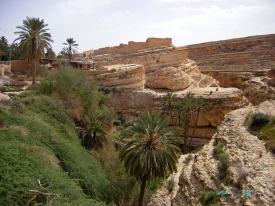
The valley is associated above all with Collagua and Cabana communities, whose history is visible in the agricultural terraces known locally as andenes. These stepped fields follow the contours of the mountainsides, making cultivation possible on slopes where flat ground is scarce. The terraces are not simply archaeological decoration: farms and irrigation works remain part of the living landscape. A cultural account published by Peru’s Ministry of Culture places the valley within a long history of settlement and describes the region as a cultural landscape shaped by successive communities, including the Collagua, Cabana and Inca.
Colonial-era towns added another layer rather than erasing what came before. Churches, plazas and houses sit among older paths, fields and water channels; local customs, textiles, food and celebrations continue to give the valley a distinct identity. The route therefore rewards attention beyond the roadside panorama. Notice how a village is positioned beside its cultivated slopes, how water is channelled across uneven ground, and how a church anchors the central plaza. These are tangible parts of the story, not scenery staged for visitors, and respectful observation matters more than treating community life as a performance.
Villages, routes and the Cruz del Cóndor
AUTOCOLCA’s left-bank route names Yanque, Achoma, Maca, Cabanaconde and Tapay among the districts and communities encountered on this side of the valley. Its visitor information describes a mix of natural scenery, cultural expression, food, hot springs, archaeological places and colonial and Inca architecture. Chivay is a practical starting point for many itineraries, while the road continues toward Cabanaconde and Tapay. The official route page lists accommodation, restaurants, transport and tourism guides as services available along the route, though individual opening times and availability should be checked with providers.
The Cruz del Cóndor lookout is the best-known stop. Peru’s tourism inventory places it roughly 45 kilometres from Chivay, with a listed road journey of about an hour, and describes the morning as the customary window for watching condors. The same inventory gives a broad visitor period of 7 a.m. to noon for the lookout. These are planning references, not a promise that a condor will appear: the birds are wild, and visibility, weather, traffic and actual access can vary. Arriving early may make the viewpoint less rushed and leaves time to continue through the valley rather than turning the entire region into a single stop.
Tickets and practical planning
AUTOCOLCA administers a tourist ticket for its wider circuit, which covers the Colca Valley and named regional areas. The official page currently lists S/70 for an international visitor, S/40 for visitors from Latin American countries and S/20 for a Peruvian adult; child and other special rates have separate conditions. The ticket is a right of entry, not a package: it does not include a vehicle, guide, meals or accommodation, and the page specifically excludes the La Calera thermal complex and Uyo Uyo archaeological site. It is valid once from the date of purchase, so visitors planning a multi-day itinerary should check the terms before paying.
Official purchase points listed by AUTOCOLCA include its information office in Arequipa and the control or interpretation point at the entrance to Chivay. The authority posts opening hours for these ticket counters, but those are not the opening hours of every attraction in the valley. Check the live AUTOCOLCA page shortly before departure for prices, sales arrangements and any notices. Ask local accommodation or a licensed operator about transport and road conditions, and allow enough time for stops rather than relying on an unverified timetable copied from an old travel page.
For a rewarding visit, combine a viewpoint with at least one village and time to understand the terraces and the highland setting. Choose permitted transport and a qualified guide when you need one, follow local instructions, and ask before photographing people or entering private fields and community spaces. The Colca is compelling not because a record label settles its importance, but because river, mountain agriculture, living towns and long cultural memory remain connected in the same landscape. Leaving room for that wider story turns a quick excursion into a more informed encounter with southern Peru.