About Abadía de Kylemore
Kylemore Abbey: the romantic castle that became Connemara’s great spiritual landmarkIn the wild heart of Connemara, amid lake, mountain and Atlantic mist, Kylemore Abbey looks as though it had stepped out of a Victorian novel. The image is unforgettable: a grand stone building reflected in the water, surrounded by a landscape that captures much of the imagination of western Ireland. Yet Kylemore’s appeal is not only visual. What truly sets it apart is the way a private nineteenth-century castle was transformed into a Benedictine abbey, a school, and a cultural landmark that continues to draw visitors from around the world.
The story began in the 1860s, when Mitchell Henry and Margaret Vaughan Henry decided to build a family residence here. The first stone was laid by Margaret on September 4, 1867, and the castle was completed in 1868. It was never intended as a medieval fortress, but as a grand Victorian home in the middle of nature, an expression of love for the Connemara landscape and at the same time a display of the wealth and status of its owners. From the beginning, Kylemore was more than a house: it was an ambitious estate designed to combine elegance, seclusion and self-sufficiency.
Its history, however, soon took unexpected turns. After the Henry family’s period and a later chapter linked to the Duke and Duchess of Manchester, the place changed its meaning completely in 1920. That year, a group of Benedictine nuns who had fled Belgium after their abbey in Ypres was destroyed during the First World War found a new home at Kylemore. From then on, the former castle ceased to be simply an aristocratic residence and became a religious house shaped by prayer, education and endurance.
That second life defined the Kylemore visitors know today. In 1923 the Benedictine community founded a boarding and day school that operated until 2010 and left a deep mark on generations of students. The estate was therefore never just a monument to admire, but a lived-in place with routines, study, community and memory. That human continuity is one of the keys to its enduring charm: Kylemore is not a frozen ruin, but a place that has reinvented itself without severing ties with its past.
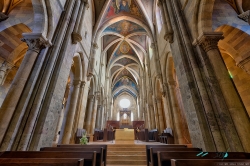
The setting plays an equally important role. The abbey stands within a vast Connemara estate, and the experience of visiting it often feels complete because architecture and landscape are inseparable. The restored rooms, the neo-Gothic church, the lakeside walks and the Victorian walled gardens do not compete with one another; together they create a unified story about nature, spirituality and heritage. Few Irish landmarks are so instantly recognizable and at the same time so layered with history.
That is why Kylemore Abbey continues to fascinate far beyond its postcard beauty. It embodies the Victorian taste for dramatic landscapes, the impact of European wars on religious communities, and Ireland’s ability to turn places of memory into living spaces. By the time visitors leave, the question is no longer only who built the castle or why it passed into Benedictine hands. The deeper question is how such a remote place became one of the most evocative destinations in Ireland. The answer lies in plain sight: in the stone, in the water and in a story that can still be read with remarkable clarity.