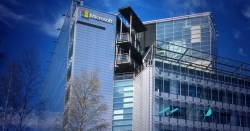
200 West Street: the Goldman Sachs tower shaping Lower Manhattan
A headquarters with a public-facing address
At the corner of West and Vesey streets, 200 West Street rises in Lower Manhattan as the global headquarters of Goldman Sachs. The building is a working office tower, not a museum or a conventional visitor attraction. Its position, however, makes it part of a district that many visitors already explore: the World Trade Center area lies across West Street, while Brookfield Place and Battery Park City sit nearby. The most responsible way to approach it as a traveler is to understand the building from the public realm and not assume that office entrances, lobbies or private walkways are open to sightseeing.
Architect Henry N. Cobb of Pei Cobb Freed & Partners designed the tower with Adamson Associates as architectural consultant. The firm describes a 45-story building, 740 feet high, with about 2.1 million square feet of gross floor area. Those figures differ slightly from measurements published elsewhere, so this account follows the architect’s project description rather than blending unlike sources. The design was developed to consolidate Goldman Sachs’ New York offices in one location, giving the corporate brief a substantial presence on the Hudson-facing edge of Lower Manhattan.
The tower’s massing responds to the surrounding street plan. Its angular sides along West and Murray streets reflect two different Lower Manhattan grids, while the west façade curves toward the Hudson River. Stainless steel and glass form the exterior skin, and three major setbacks break the height into visible stages. From the street, those changes help the building read as more than a single vertical slab; from farther away, the curved side becomes a marker along the riverfront skyline.
Architecture between the city and the Hudson
200 West Street is a useful stop for people interested in how contemporary office architecture meets an older urban fabric. Lower Manhattan’s short blocks, changing street directions and varied building heights create a different context from a uniform tower district. The architects say the tower’s geometry draws on those street grids, while its river-facing curve acknowledges the broad western view. Looking at the building from more than one side can make these design choices easier to read than a single frontal photograph.
The project also includes a pedestrian connection beneath a sculptural glass canopy, lined with retail spaces and designed as a link between Brookfield Place and Battery Park City’s northern residential neighborhood. The architecture practice describes it as a gathering place as well as a route. That distinction matters: a path can be part of the urban design without making the office interior a public attraction. Its present availability may depend on security, tenant operations and nearby construction, so visitors should follow posted access rules and use official neighborhood updates.
The building earned LEED Gold certification, according to its architect. This is a sustainability credential for the project, not a promise that every part of the building is visible or that its offices are open to the public. A visitor can still examine the relationship between façade, setbacks, street wall and waterfront from public viewpoints. The reward is architectural reading rather than an interior tour: notice how the curve turns the tower toward the river, then compare it with the hard-edged street elevations and the lower buildings around Brookfield Place.
From a 2005 groundbreaking to a Lower Manhattan landmark
Goldman Sachs says it broke ground on the headquarters on November 29, 2005, and opened the building for business on November 16, 2009. Employees moved in over the following year, with the final group arriving in December 2010. The company describes the project as a way to consolidate its New York workforce in a single building. These milestones make the tower part of the post-2001 rebuilding period in Lower Manhattan, but the facts should not be simplified into a claim that one office tower alone rebuilt the district.
The firm’s own history connects the site to Battery Park City’s earlier development. In 1972, Goldman Sachs co-managed underwriting for a $200 million Battery Park City Authority bond intended to finance landfill on the Hudson. The office project came decades later, after plans for a neighborhood of homes, schools, shops and offices had evolved. This is an institutional account from the company, so it is best read as one perspective on the area’s development rather than a complete history of public policy, land reclamation or residents’ experience.
Its setting also places it within walking distance of the World Trade Center site and the National September 11 Memorial and Museum, as Goldman Sachs notes in its account of the building. That proximity gives the tower a place in a district transformed by the 2001 attacks and subsequent redevelopment. Visitors can consider that wider setting without treating a corporate headquarters as a memorial. The architecture is one layer of a neighborhood that includes workplaces, public spaces, transport links and sites of remembrance.
What visitors can—and cannot—plan to see
At the time of research, Goldman Sachs and the architect publish project information but no regular public sightseeing hours or general interior tour for 200 West Street. Plan on viewing it from public streets and authorized open spaces, and do not enter a lobby, office floor or controlled walkway unless staff or signs explicitly permit it. The building is not presented as a ticketed attraction; the sources reviewed do not establish public admission, a visitor desk or a general tour price. If an event or private appointment brings you there, follow the instructions for that booking.
Nearby Battery Park City offers a public waterfront setting, including plazas, seating and the Hudson River Esplanade, but access conditions are changing during the Battery Park City Resiliency project. The project’s current construction page lists open and closed spaces and rerouted pedestrian paths; it also warns that schedules may change. Check those notices on the day of your visit rather than relying on an old map. Brookfield Place is a nearby commercial complex, but its shops and public areas are distinct from Goldman Sachs’ secure offices.
For a short architecture walk, start by identifying the tower from West Street, then compare its curved Hudson-facing elevation with the angular sides described by its designers. Continue only along routes currently marked open, and leave time for the public waterfront spaces that remain accessible. The nearest useful context is not a promised building tour but the contrast between the glass-and-steel headquarters, the adjoining public realm and the river’s edge. That modest plan respects the site’s private use while still revealing why 200 West Street matters to the Lower Manhattan skyline.