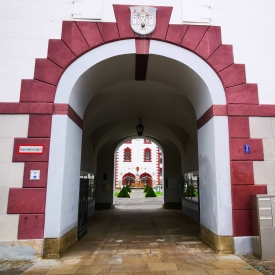
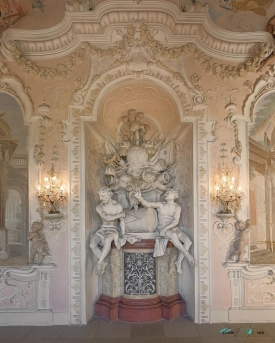
Approaching Würzburg Residence from the forecourt, visitors encounter a palace whose grandeur is inseparable from its complicated history. Built for the prince-bishops of Würzburg, it is a landmark of European Baroque architecture and a UNESCO World Heritage site. Yet the rooms are not simply a preserved court interior: fire in 1945 destroyed much of the building, and decades of reconstruction shaped what visitors see today. The most rewarding visit holds both ideas together—artistic ambition and the careful work of rescue, repair and interpretation.
Construction began in 1720 under Prince-Bishop Johann Philipp Franz von Schönborn, who entrusted the design to the young architect Balthasar Neumann. The shell was completed in 1744, while furnishing and interior work continued until about 1780. Neumann remained central to the project through successive patrons, including Johann Philipp’s brother Friedrich Carl von Schönborn. The palace brought together German Baroque, French Classicism and influences from Vienna, drawing on designs and advice from several leading European architects.