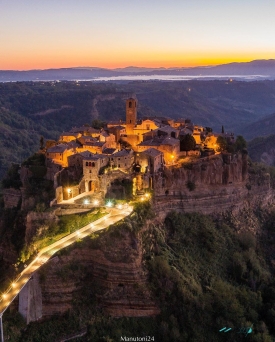
Urbino rises above the hills of Italy’s Marche region, inland from the Adriatic coast. Its historic center is not a collection of isolated monuments: streets, walls, churches and the Ducal Palace form a compact urban landscape whose Renaissance character remains unusually legible. UNESCO inscribed the historic center on its World Heritage List in 1998, noting both its cultural flowering in the fifteenth century and the way later economic decline helped preserve its appearance. The result is a place where the steep approach and narrow lanes are part of the encounter, not just the route between attractions.
The town is also closely linked with Raphael, born here in 1483, and with the architect Donato Bramante, who was also born in Urbino. Its university, founded in 1506, continues to give the small city a student presence. That combination—courtly Renaissance heritage, an active academic community and a hilltop setting—makes Urbino more than a day-trip photograph. It rewards a slow walk, especially when visitors look beyond the palace courtyard to the quieter oratories, lanes and civic spaces.