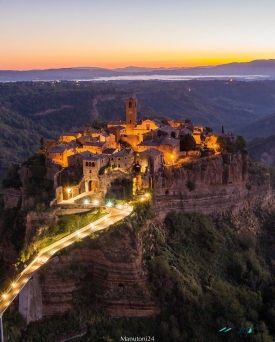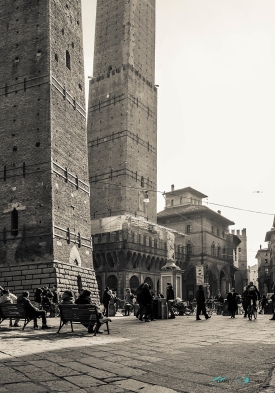
Urbino's compact historic centre is one of Italy's clearest demonstrations that Renaissance culture was an urban project as well as an artistic movement. UNESCO inscribed the walled centre in 1998, recognizing both its influence on European culture and the exceptional way Renaissance architecture was adapted to an older medieval hill town. Economic and cultural stagnation after the 16th century unintentionally helped preserve the appearance created during its most brilliant period.
The decisive figure was Federico da Montefeltro, ruler from 1444 to 1482. His court gathered humanists, mathematicians, architects and painters, among them Leon Battista Alberti, Piero della Francesca, Luciano Laurana and Francesco di Giorgio Martini. Rather than erase the inherited town, their projects reshaped it into a courtly capital whose streets, palace and skyline worked together.