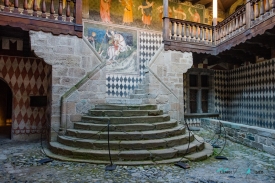
In Milan, Santa Maria delle Grazie is known worldwide because the refectory of its Dominican convent holds Leonardo da Vinci’s Last Supper. Yet the painting is not an isolated gallery attraction: church, convent, cloisters and refectory form one architectural and religious complex. That distinction matters to visitors. The church remains a place of worship, while the mural is shown in a carefully controlled museum space next door. Together, they reveal how Renaissance art, Dominican life and the city’s history overlap at a single address.
Construction began in 1463 under the direction of Guiniforte Solari, according to UNESCO. At the end of the fifteenth century, the complex was substantially altered by Donato Bramante, who enlarged the church and added features including the dome, apse and cloister. These successive campaigns explain why a visit is more rewarding when visitors look at the whole ensemble rather than rushing directly to the refectory. The site records a change in architectural taste as well as the ambitions of Milan’s ruling court.