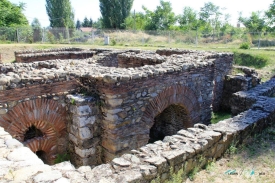
Rozafa Castle rises on a rocky hill at the southeastern approach to Shkodër, northern Albania. The national tourism agency places it about 130 metres above sea level; from its walls, visitors look toward the city, Lake Shkodër and the meeting of the Buna and Drin rivers. This commanding position explains the site’s long defensive importance, but the view is only the beginning: the hill contains a layered archaeological landscape rather than a fortress built in one campaign.
Albania’s tourism authority describes the castle as originating in the Illyrian period and records later Roman, Byzantine, Venetian and Ottoman phases. Archaeologists, however, caution against treating every visible wall as an unchanged survival from the earliest periods. Excavation reports describe difficult stratigraphy, substantial Venetian and Ottoman deposits and erosion caused by the rivers surrounding the hill. Research has aimed to distinguish the city’s Hellenistic phases from earlier Illyrian traces, so the site’s long history is still being refined.