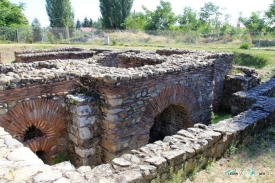
Ancient Aigai, beside modern Vergina, was the first capital and royal burial place of the Macedonian kingdom. The discovery of unplundered tombs beneath the Great Tumulus in 1977 by Manolis Andronikos transformed knowledge of Macedonian art, ceremony and kingship. The underground museum preserves tomb façades and burial chambers close to where they were found.
The richest chamber tomb is attributed by the excavator and prevailing interpretation to Philip II, father of Alexander the Great, who was assassinated at Aigai in 336 BCE. Its cremated remains, gold larnax, wreath, armour and banquet vessels form an exceptional assemblage. Scholarly debate over individual identifications exists, and visitors should separate secure dating and context from absolute certainty about every burial.