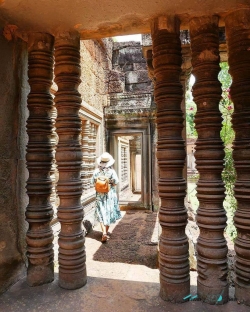
On the riverfront of central Phnom Penh, Cambodia’s Royal Palace is not a museum arranged around a past court. It remains a working royal residence, and the public sees only the ceremonial portion of the compound. That distinction shapes the visit: buildings, gardens and religious objects are encountered within an active institution whose access can change for official events. The palace is a cultural landmark, but it is also part of the present-day life of the Cambodian monarchy.
The site’s modern history is closely tied to the capital’s relocation. Cambodia’s Ministry of Tourism says King Norodom moved the capital from Oudong to Phnom Penh in 1866 and that the palace was laid out soon afterward on the riverfront site it still occupies. Most visible buildings date from that era or later rebuilding. The move explains why the palace stands at the heart of the contemporary capital, while the royal history of Cambodia itself reaches much further back.