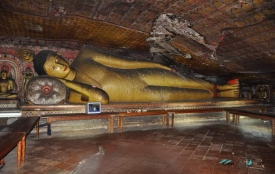
In Sri Lanka’s North Central Province, Polonnaruwa preserves the remains of a city that became the island’s second major capital after Anuradhapura. UNESCO dates that transition to the aftermath of Anuradhapura’s destruction in 993, while the Central Cultural Fund traces the area’s importance further back. A Brahmi inscription from the second century BCE records a cave shelter donated to Buddhist monks.
For centuries, Polonnaruwa served as a strategically important provincial centre. Around the middle of the eleventh century it rose to capital status, and the city flourished under rulers including Vijayabahu I, Parakramabahu I and Nissanka Malla. The medieval capital endured for roughly two and a half centuries, but its monuments reflect a political and agricultural system whose reach extended far beyond the royal court.