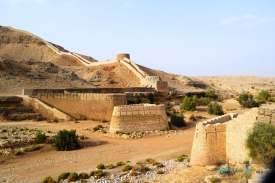
On the right bank of the Indus River in Pakistan’s Sindh Province, Mohenjo-daro preserves one of South Asia’s most important Bronze Age urban landscapes. The UNESCO World Heritage Centre places it about 28 kilometres from Larkana and 510 kilometres northeast of Karachi. Its name is commonly rendered as “Mound of the Dead,” although the ancient city’s own name is unknown. The site is also called Moenjodaro in UNESCO’s official World Heritage listing; the different spellings refer to the same archaeological property.
The city flourished within the Indus civilization, broadly dated by UNESCO from about 2500 to 1500 BCE. Its remains demonstrate that urban life in the region involved planned streets, specialized construction and civic infrastructure long before the better-known historical empires of South Asia. The settlement’s scale and organization are impressive, but they should not invite easy claims about who ruled it or what its symbols meant: the Indus script remains undeciphered, and many details of political and religious life are still debated.