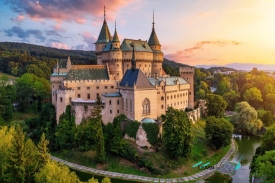
Lednice–Valtice is best understood not as a single palace or garden, but as a large designed landscape in South Moravia where estates, parkland, water and architecture were deliberately connected. The World Heritage property covers about 143.985 square kilometres according to UNESCO’s current listed area, and its boundary was modified in 2025. Its two principal seats, Lednice and Valtice, anchor a network of avenues, ponds, wooded areas and small architectural landmarks. Visitors who arrive expecting one ticketed attraction may miss the point: this is a region to explore by choosing a route and then visiting individual buildings according to their separate opening conditions.
The Liechtenstein family acquired Lednice in the mid-thirteenth century and nearby Valtice by the end of the fourteenth. The estates were later combined with Břeclav holdings to form a connected whole for the family’s recreation and to express its status. UNESCO traces the larger design from the seventeenth century, when avenues began linking Valtice to other parts of the estate, through eighteenth-century paths and scenic routes. By the early nineteenth century, Duke Jan Josef I applied English landscape-garden ideas, reshaping grounds and redirecting a channel of the Dyje River as part of extensive works.