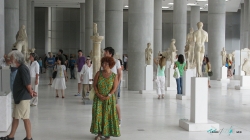
The Acropolis is more than the Parthenon seen above Athens: it is a fortified rocky hill where several periods of the city’s religious, political and architectural history meet. The gateway of the Propylaia, the Erechtheion, the Temple of Athena Nike and the Parthenon each tell a different part of that story. The Acropolis Museum preserves many original sculptures and architectural pieces from the hill.
UNESCO describes evidence of a Mycenaean citadel on the hill from the second millennium BC, including a fortified royal residence. Over time, the Acropolis took on a religious role associated with Athena, the city’s patron goddess. Its location was practical as well as symbolic: a steep-sided outcrop above the basin of Athens, protected by walls and visible across the surrounding plain. Earlier layers, later religious uses and successive changes in political power all contributed to the site’s present form.