Villa Guardamangia, Malta: the royal home being restored in Pietà
A villa with a history still being uncovered
Villa Guardamangia stands on Guardamangia Hill in Pietà, a short distance from Malta’s Grand Harbour. Heritage Malta describes it as one of the earliest surviving residences in Pietà and says its story reaches back to the eighteenth century, while stressing that its exact construction date and full early history remain under study. That uncertainty matters: this is not a house whose past can be reduced to a single royal chapter or a perfectly documented origin.
The property began as a country retreat for affluent families looking beyond the crowded harbour towns. Heritage Malta’s research traces an eighteenth-century reference connected with the marriage dowry of Lorenzo Fontani and Giovanna Crespi. In 1866 Marquis Emmanuel Scicluna acquired the villa as a summer house. Ownership later passed through prominent Maltese commercial families, including the Borda and Cassar Torregiani families, before politician Augustus Bartolo bought it in 1935.
Bartolo lived there until his death in 1937. His heirs then sold the residence to Joseph Schembri, whose property became the setting for its best-known twentieth-century period. The villa’s sequence of owners reflects changing social and political Malta: a retreat associated with private wealth became a residence connected to naval service and the British royal family, and is now part of a national heritage project. The building remains a source for the history of its neighbourhood as well as its famous occupants.
Mountbatten, Elizabeth and Philip in Malta
The royal connection emerged after Louis Mountbatten, then commanding a cruiser squadron based in Malta, took up the villa in 1948. Prince Philip was assigned to HMS Chequers, part of the First Destroyer Flotilla based on the island. Mountbatten offered the accommodation to his nephew in 1949, and Princess Elizabeth stayed with Philip when his naval duties allowed. Heritage Malta describes their presence as periods between 1949 and 1951, not as a claim that the couple occupied the house continuously throughout every day of those years.
The villa’s story also belongs to Malta’s colonial setting in the mid-twentieth century. Heritage Malta notes that the Mountbattens and the royal couple attended national and social events, acting as representatives of Britain at a time when decolonisation shaped policy. A visit can therefore raise questions beyond royal biography: who lived in a grand house, who worked there, and how imperial relationships shaped public life. The restoration’s planned interpretation intends to preserve this context rather than present the villa only as a celebrity residence.
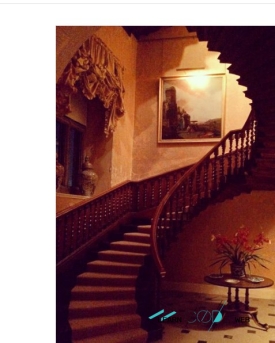
The house is substantial but domestic in scale. Heritage Malta records 18 rooms, stables, an underground shelter and a large garden. Its rooms, service spaces and outdoor grounds offer clues to daily life across several generations, from its use as a summer residence to its mid-century occupation. The agency has collected testimony from people who lived or worked there before and after Elizabeth’s stays, as well as people who provided services to the royal couple. Such accounts can broaden a story often told only through famous names.
Restoration, research and a future museum
Malta acquired the property in 2020 with the stated intention of restoring it and opening it as a historic house representing the mid-twentieth-century period. Heritage Malta’s current visitor page describes the museum as temporarily closed. On 1 October 2025 the agency announced that rehabilitation, restoration and conservation works had begun. Its press release estimated a cost of just over €12 million, with more than €10 million from the European Regional Development Fund, and said the project was expected to take about three years.
The work is as much about stabilising and understanding the building as it is about preparing rooms for visitors. Heritage Malta reported that endangered sections of the façade were propped and other parts reinforced, a detailed architectural survey was completed, and debris was removed. Conservators treated stone statues that once stood in the garden and domestic appliances used in the 1940s and 1950s. Decorative wall schemes emerged during the investigation and are to be restored, while temperature and humidity data will guide decisions about the house’s long-term care.
Research has also examined former owners, furnishings and the building’s development, including first-hand memories from residents and staff. The planned visitor experience is intended to recreate the atmosphere of a 1950s home and focus on the ordinary domestic life the royal couple valued. A small exhibition and documentary are planned to explain Malta’s relationship with the British royal family and the colonial context of the period. These are project intentions published by the agency, not facilities already open to the public.
How to plan a visit to Pietà
For now, Villa Guardamangia is not an open museum. Heritage Malta lists it as temporarily closed, and its restoration announcement does not give a confirmed reopening date. There are therefore no current public visiting hours or ticket prices to plan around. Check the official site before travelling; an estimated project duration published in 2025 should not be treated as a guarantee that the house will open on a particular date.
The official address is 49 Villa Guardamangia, Guardamangia Hill, Pietà PTA 1315. Heritage Malta says the nearest bus stop is about a five-minute walk away and links visitors to Malta Public Transport journey planning. Because restoration activity may affect access around the property, use those official directions and respect any barriers or worksite restrictions. The villa is part of a lived neighbourhood, so an exterior look should be quiet and should not disrupt residents.
While the house remains closed, Heritage Malta provides a virtual 360-degree experience and images of the garden’s planned appearance. These are useful ways to understand the property without treating a construction site as a visitor attraction. Villa Guardamangia’s appeal lies in the combination of uncertain eighteenth-century beginnings, a layered Maltese ownership history, documented royal stays and the work now underway to make a fragile residence accessible. The responsible visit today is to check the restoration status first and return only when the agency confirms that the doors have reopened.