About U.S. Bank Stadium
A downtown stadium built for a changing Minneapolis
On the edge of downtown Minneapolis, U.S. Bank Stadium is more than the home field of the Minnesota Vikings. Its address at 401 Chicago Avenue places it in the city’s East Town area, close to the central business district and the light-rail network. The venue occupies the former site of the Hubert H. Humphrey Metrodome, the enclosed stadium that served the Vikings before closing in 2013. That replacement was a major public project, not simply a new shell for football: the Minnesota Legislature and Minneapolis City Council approved a $975 million funding plan in 2012.
The Minnesota Sports Facilities Authority, the Vikings and architecture firm HKS presented the design in 2013. Construction took a little over two and a half years, and the building opened on July 22, 2016. Its first public weekend drew more than 190,000 Minnesotans, according to the stadium’s own history. The scale of that opening reflected an ambition to create a year-round gathering place in a northern city, where an outdoor venue is not practical for every date on the calendar.
The stadium’s story also follows a longer Minnesota football map. The Vikings had played at the Metrodome from 1982 until its closure; during construction, they used the University of Minnesota’s TCF Bank Stadium for two seasons. Their earlier home, Metropolitan Stadium in Bloomington, later gave way to the Mall of America. U.S. Bank Stadium therefore links professional sport to a changing urban region, while its downtown location makes arrival part of the visit rather than a separate drive to a suburban complex.
A roof that keeps the sky in view
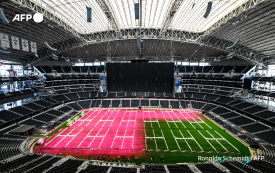
The building’s most legible architectural feature is a fixed roof whose transparent ETFE panels cover about 60 percent of its structure. The stadium describes the lightweight polymer film as a way to bring daylight and views of the sky into a climate-controlled interior. Visitors do not experience an open-air football ground: the enclosure remains closed, but natural light changes the sense of scale above the seating bowl. On a bright day, the roof can make the interior feel connected to the weather without exposing spectators to it.
That design responds to a practical challenge as much as an image-making one. Minneapolis winters are a consideration for a venue that hosts football, concerts, college sports and other events across the year. A fixed enclosure gives organizers a protected environment, while translucent roof panels and extensive glass help keep the interior from reading as a sealed, windowless box. Rather than treating the roof as a decorative flourish, the stadium’s architecture makes it part of how people use the building.
The venue’s environmental credentials are also part of its public story. It received LEED Gold certification for building design and construction in 2017 and LEED Platinum for building operations and maintenance in 2019, the highest rating in that LEED category. Those labels refer to different stages: the first concerns design and construction, while the later award concerns ongoing operation. The stadium has also reported waste-diversion and energy measures, but certifications should not be mistaken for a claim that a large event venue has no environmental footprint.
From first events to a national stage
The opening schedule quickly showed that the venue was intended for more than one sport. Its first event was an International Champions Cup football match between A.C. Milan and Chelsea on August 3, 2016. Luke Bryan played the first concert on August 19, followed the next night by Metallica. For the Vikings, the first regular-season home win came against Green Bay on September 18, 2016, a 17–14 result recorded in the stadium’s official history.
Since then, U.S. Bank Stadium has hosted events with national reach. Super Bowl LII took place there on February 4, 2018, and the building welcomed the NCAA Men’s Final Four in 2019. The stadium’s multi-use role also includes concerts, family shows, college competitions and private events. Its calendar is the best guide to what a visitor can actually see: an event changes the building’s public access, ticketing, security procedures and available transportation, so a general stadium visit should not be confused with entry to a game or concert.
The place is also a useful case study in how large events are presented to the public. On a tour, the stadium’s art collection, premium clubs, field area, interview rooms and press level can reveal the less visible systems behind a game-day broadcast. Yet routes vary with the venue’s schedule, and no single list of stops is guaranteed on every date. The building is at its most interesting when viewed as both a sports arena and a working event operation, rather than as a static monument.
How to plan a visit without surprises
Public guided tours are sold through the stadium’s official ticket partner, and advance purchase is recommended. The stadium’s tour page currently lists 90-minute public tours from Wednesday through Sunday, while its separate FAQ lists Thursday through Sunday; both explain that blackout dates and venue activity affect availability. Check the live tour calendar for the exact date and time before making plans. Tours may include the Vikings locker room, the Legacy Ship, stadium art, premium clubs and suites, the field area, interview rooms and press level, but each stop depends on that day’s operations.
Come five minutes before the scheduled start: the official policy says tours begin on time and guests more than ten minutes late may be denied entry. Comfortable walking shoes are advised. The stadium says tours are accessible and wheelchairs can be requested, subject to availability; contact the tour department in advance for assistance. Public-tour tickets are separate from event tickets, and parking is not included. The stadium does not manage public parking directly, so visitors should check current directions and event-day conditions rather than assume a particular ramp will be available.
The address is 401 Chicago Avenue, Minneapolis, Minnesota 55415. Metro Transit’s Blue and Green light-rail lines stop at U.S. Bank Stadium Station immediately outside the venue, making public transport a straightforward option for many visitors. For a game or concert, review the event calendar, bag rules and transit service notices before leaving. A tour reservation, an event ticket and a stadium’s day-to-day access are three different things; confirming each one in advance is the simplest way to enjoy the architecture and the atmosphere without arriving at a closed door.