About Huacachina
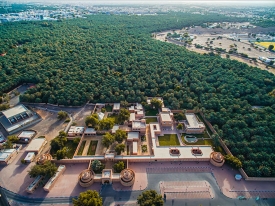
Huacachina is a palm-fringed lagoon set among the dunes of Peru’s coastal desert, about five kilometres from the city of Ica. The contrast is immediate: a green waterline and shade trees sit below immense sand slopes, while the regional capital is a short drive away. Visitors come for the landscape, boat or pedal-boat rides, and excursions into the dunes, but the oasis is not merely a backdrop for adventure sports. It is a protected regional conservation area with a history as a health resort and a small urban settlement that has had to balance tourism, water and fragile desert ecology. Knowing those layers makes a brief stop more meaningful—and helps travellers plan responsibly.
How a desert oasis became a resort
Huacachina lies in the Ica desert, roughly 406 metres above sea level according to Peru’s official tourism portal. The lagoon is surrounded by palms, huarangos and other vegetation, with birds, fish and desert-adapted life in and around the water. The Spanish-language account describes underground seepage as the source of the oasis; the exact water balance is also a conservation concern, so it is better not to assume that the lagoon is unaffected by wells or urban demand. The name is often translated as “the woman who cries” in Quechua, and a story about a woman whose tears formed the lagoon is part of local folklore. It is a legend, not a verified origin story.
Huacachina’s modern history is tied to its reputation for warm weather and waters once believed to have therapeutic properties. By around 1960, it had become one of Peru’s prominent and exclusive seaside-style resorts, despite being far from the sea. Houses and hotels appeared, and a promenade with walkways and bathing facilities was built around the lagoon; the road to Ica was paved and planted with shade trees. The remains of that resort landscape still shape the settlement’s distinctive ring around the water. In 1985, the Ministry of Culture recognized Huacachina as a Monumental Urban Environment. In 2014, Peru established the 2,407.72-hectare Regional Conservation Area around the lagoon to protect biological, cultural and scenic values in the subtropical desert.
More than a lagoon-side photo
The visitor experience has two scales. Along the water, the promenade offers a close view of the lagoon, hotels, restaurants and palms reflected in its surface. A Ministry of Foreign Trade and Tourism inventory lists boating, pedal boats, landscape and bird observation, photography, and sandboarding among activities associated with the resource. The national tourism portal also describes guided interpretation and dune walks, particularly around sunrise or sunset. Services are provided by separate local businesses, so prices, departure times and what is included vary. Ask what a ticket covers before boarding, and use operators who explain their route and safety arrangements instead of assuming every vehicle or excursion follows the same rules.
The dunes are the second scale—and a different kind of landscape from the planted oasis edge. Tubular vehicles and sandboarding are popular ways to reach the open sand, while walking offers a slower view across the Ica desert. A climb to the upper part of the northern dune is noted in the tourism inventory as a natural viewpoint over the lagoon and desert. Sand can be steep and tiring, and the sun remains strong even when the air feels cool. Carry water, sun protection and footwear suited to loose sand; if you join a motorized trip, follow the operator’s instructions and do not walk onto a vehicle route without checking that it is safe.
Access, hours and a forthcoming entrance fee
Huacachina is approximately five kilometres from Ica’s main square. Peru Travel estimates the drive from Lima to Ica at about five hours and the final leg from Ica to Huacachina at around 15 minutes, though actual road time depends on traffic and departure point. From Ica, the tourism inventory lists taxi, public bus, tourist transport and mototaxi options; confirm local service and fares on the day. The oasis is suitable for a short visit from Ica, while an overnight stay makes it easier to see the dunes in changing light. Carry some cash as well as a phone, since not every small service will handle payment the same way.
Hours and admission need a date-aware explanation. The MINCETUR tourist inventory, whose last intervention shown is 10 July 2024, lists a general visiting window of 05:00–22:00 and says entry is free within the Monumental Urban Environment. Treat that as a published reference, not a guarantee that every business, activity or protected-area access point follows those hours today; reconfirm with local authorities or your operator. A regional ordinance approved in April and published in Peru’s official gazette on 19 August 2026 establishes individual entrance charges for the Regional Conservation Area. Because the rule takes effect twelve months after publication, the scheduled start is 19 August 2027—not October 2026. The published amounts are S/8.10 for foreign visitors, S/4 for national visitors and S/2 for specified local and preferential categories. Check for later changes before travelling in 2027.
Enjoy the dunes without overlooking conservation
Huacachina’s popularity brings practical safety and management questions. In May 2026, MINCETUR said tubular-vehicle companies operating in the area must seek municipal authorization and comply with technical and safety requirements. That is a useful reason to book through a formal provider and ask about the route, the vehicle and the return point. The ministry’s work with regional and local authorities is part of an effort to strengthen safety, formal service and sustainability; it is not an endorsement of a particular company. Keep your own belongings secure, agree on the trip length and avoid pressuring a driver to take an unsafe line on the dunes.
Conservation also changes how the landscape should be read. The tourism inventory flags falling lagoon levels associated with nearby tubular wells and warns that uncontrolled sandboarding can contribute to dune erosion; the entry is not a current scientific monitoring report, but it documents pressures that deserve attention. The regional protection area covers far more than the lagoon’s picturesque edge. Stay on established access routes, avoid damaging vegetation and take litter away. Huacachina’s appeal comes from a rare meeting of desert, water and settlement. A responsible visit supports local businesses while recognizing that the oasis is a living environment—not an amusement park whose landscape can absorb unlimited use.
A good Huacachina visit can be simple: arrive from Ica, walk the promenade, choose a properly explained boat or dune excursion, and leave time to watch the light change over the sand. The oasis’s old resort history, its folklore and its regional conservation status all add context to the view. Confirm hours and tour details locally, and remember that the new conservation-area fee is scheduled for August 2027, subject to any later update. Beyond the familiar sunset photograph is a desert habitat and a community adapting to tourism. The place is most compelling when adventure and attention go together.