About Al-Ahsa Oasis
Al-Ahsa Oasis: a living landscape of palms, water and settlement
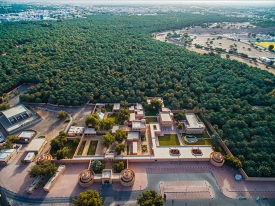
Al-Ahsa in Saudi Arabia’s Eastern Province is not a single garden behind an entrance gate. It is an immense cultural landscape of palm groves, springs, canals, farms, historic neighbourhoods and archaeological sites around Hofuf and Al Mubarraz. UNESCO lists it as an evolving landscape because human communities have continually managed water and cultivation in an arid environment from antiquity to the present.
The World Heritage property contains twelve component areas across more than 8,500 hectares. UNESCO records around 2.5 million date palms, while Saudi tourism sources use higher estimates for the broader oasis. Rather than treating one number as timeless, visitors should focus on the functioning system: groundwater and springs historically fed channels and fields; modern pumping and drainage now interact with older methods.
From Al-Qarah to historic Hofuf
Jabal Al-Qarah’s limestone formations and passages reveal the oasis from above and offer a cooler microclimate within some cavities. In Hofuf, Ibrahim Palace combines administrative, military and religious functions from the Ottoman period and later Saudi history. Al-Qaisariya Souq remains a place for dates, spices, textiles and crafts, while historic mosques, farms and villages show that the UNESCO story is distributed rather than concentrated in one monument.
Al-Ahsa sat on routes connecting the Gulf coast with the Arabian interior. Archaeological evidence and surviving settlements document long occupation, while date agriculture shaped food, trade and seasonal labour. Visitors should avoid describing every spring as ancient and unchanged; water flows and access have been altered, and some once-famous bathing areas no longer operate as they did.
How to plan the oasis
Visit Saudi’s official destination page, updated in August 2026, presents current attractions but each component sets its own hours and admission. Public landscapes and souqs differ from managed caves, museums and palaces. Check the official listing for every planned interior, particularly around prayer times, Friday schedules and seasonal events.
- Base the day in Hofuf and use a car or licensed guide for dispersed components.
- Allow a full day, or two if combining heritage buildings, farms and Jabal Al-Qarah.
- Dress modestly, avoid photographing people without consent and respect prayer spaces.
- Buy dates from accountable local producers and do not enter private groves uninvited.
An oasis beyond superlatives
Promotional language calls Al-Ahsa the world’s largest oasis, but its deeper value lies in adaptation. Palms create shade for crops below, settlements cluster around water and modern urban growth presses against productive land. A good visit connects the view from Al-Qarah with a walk through Hofuf and a conversation about cultivation. The oasis then becomes not a green anomaly in the desert, but a sophisticated and still-changing relationship between water, labour and community.