Canaima National Park: tepuis, Angel Falls and Pemón territory
A protected landscape measured in millions of hectares
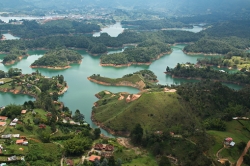
Canaima National Park occupies about three million hectares in southeastern Venezuela, in Bolívar State near the borders with Guyana and Brazil. The scale matters: this is not a compact viewpoint around one waterfall but a vast landscape of table mountains, savannas, forests, rivers and wetlands. UNESCO reports that roughly 65 percent of the park is covered by tepui formations, whose sheer cliffs and isolated summits create an extraordinary geological setting.
Venezuela established the park on June 12, 1962. UNESCO inscribed it as a World Heritage site in 1994 for its scenery and geological and biological importance. Those designations describe a living protected area, not a theme park with uniform access. The territory is remote, ecosystems vary from lowland forest to upland tablelands, and travel time depends on the specific sector and route selected.
Inparques describes two broad sectors: the eastern area associated with La Gran Sabana and Mount Roraima, and the western area around Canaima Lagoon and Angel Falls. These are useful geographic distinctions, but they are not interchangeable day trips. A traveller interested in the waterfall, a trek on the Gran Sabana or a tepui expedition needs to compare separate itineraries, transport arrangements, physical demands and current conditions before booking.
Tepuis and the geology behind the scenery
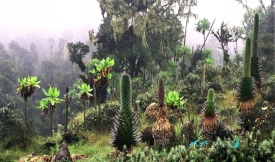
Tepuis are flat-topped mountains rising above the surrounding landscape. Their cliffs and summit plateaus are part of the ancient Guiana Shield, a geological region whose rocks preserve an exceptionally long history. The landscape’s isolated summits have distinct environments, and scientific studies have documented specialised plants and other organisms there. It is more accurate to describe these ecosystems as unusual and locally distinctive than to claim that every tepui is a self-contained world untouched by people.
Water shapes the park at every scale: broad rivers cut through savanna, streams descend from tablelands and waterfalls drop over escarpments. The UNESCO description highlights the dramatic cliffs and falls, including Angel Falls, as central features of the property. Rainfall, cloud cover and seasonal river levels affect how the scenery appears and which routes can be used. A photograph from one season cannot promise the same view or conditions during another visit.
The park is also a habitat network, not merely a collection of scenic landforms. Forest, savanna, river and tepui environments support different species and ecological relationships. The park’s remoteness can make logistics difficult, but it is not a reason to treat nature as unregulated. Visitors should follow the route and waste rules set by park authorities and operators, avoid disturbing wildlife, and keep away from sensitive summit vegetation and water sources.
Pemón heritage is part of Canaima’s present
Canaima lies within an ancestral territory of the Pemón people. Inparques describes the tepuis, rivers and waterfalls as places with cultural meaning, and the park’s value cannot be separated from the communities who maintain relationships with this landscape. Visitors should not reduce Pemón knowledge to a legend attached to a viewpoint; community voices, language and livelihoods are part of the contemporary story of the region.
The name Kerepakupai Vená is used in Pemón for Angel Falls and is commonly translated as a waterfall of the deepest place. The waterfall drops from Auyán-tepui; Inparques gives its height as 979 metres, while UNESCO’s description rounds it to about 1,000 metres. These figures refer to the immense total descent and should not be casually confused with the free-fall section alone. Using local names alongside widely known names helps readers understand that this is a lived cultural landscape.
Respect begins before arrival: ask permission before photographing people, homes or ceremonies, follow community guidance, and buy services transparently from local providers when possible. A guided visit can create income and provide context, but the guide’s role is not to turn cultural practices into a performance. The most thoughtful itinerary leaves room for the community’s own priorities and accepts that some places or stories may not be open to visitors.
Plan carefully: access, weather and responsible visits
Canaima’s remote location means access must be planned around a specific destination rather than a general park label. The western lagoon and Angel Falls sector, the Gran Sabana and Mount Roraima have different approaches; air transfers, river journeys and overland connections depend on the operator and current conditions. Do not rely on old web pages that list routes or airlines as if they ran daily. Confirm departure points, baggage limits, transfer times, guide arrangements and cancellation terms directly with a current, authorised provider.
Exact opening hours, park fees, permit requirements and route availability were not consistently published in the official sources reviewed for this article. Check the latest notices from Inparques and the local authority, and ask who is responsible for each part of an excursion. A quote should clarify what transport, meals, guiding, park charges and equipment include. If information is unclear or conditions change, postpone rather than assuming that a remote river or trail will be safe.
Pack for heat, rain and limited services: drinking water, sun and insect protection, quick-drying layers, essential medication and a way to keep documents dry. Follow local advice about river levels and weather, never approach a waterfall edge for a photograph, and do not leave waste behind. Canaima’s appeal lies in the combination of immense geology, living ecosystems and Pemón presence. A good visit does not promise a scripted adventure; it makes room for the landscape while respecting the people and limits that keep it protected.