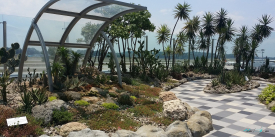
Singapore Botanic Gardens offers a rare kind of city visit: a place where shaded paths, old trees and lakes sit alongside a working botanical institution. Founded at its present site in 1859 by the Agri-Horticultural Society, it grew from a recreational garden into a centre for tropical plant research. The National Parks Board now manages the 82-hectare grounds, whose scale makes a short stroll possible but rewards a longer visit.
The garden’s history is closely tied to the region’s changing economy. UNESCO recognizes its role in the development of plantation rubber in Southeast Asia. Researchers and horticulturists tested, documented and circulated plants, knowledge and techniques; the Gardens helped turn botanical science into practical agricultural work. That legacy is more interesting than a simple story of imported plants: it shows how a garden became part of a much wider network of science, trade and colonial-era land use.