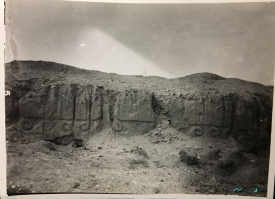
Sechín Bajo is an archaeological site in Peru’s Casma valley, in Áncash, and should not be confused with the better-known Cerro Sechín or the monumental complex of Sechín Alto. The similar names refer to distinct places in the same cultural landscape. That distinction matters for both history and travel: the stone reliefs and visitor facilities often described for Cerro Sechín are not features of Sechín Bajo, whose importance lies in a much earlier architectural sequence.
Research by Peruvian and German archaeologists, including excavations and geophysical survey, has identified three successive monumental buildings at Sechín Bajo. Studies describe a construction history extending roughly from 3500 to 1500 BCE. The oldest building is associated with a sunken circular plaza; later structures altered the design and use of the complex. Rather than a single “lost city” frozen in time, the site records generations of rebuilding across a long span of the Late Archaic and Early Formative periods.