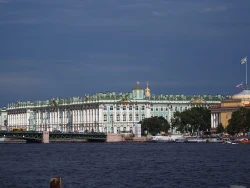
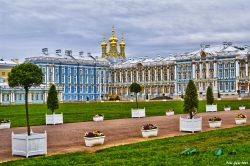
Saint Petersburg is easiest to understand outdoors, where the Neva, its branches and a network of canals set the scale of the streets. Founded in 1703 at the river’s mouth on the Gulf of Finland, the city was conceived as a new capital rather than a settlement that simply grew around an old centre. UNESCO describes its historic landscape as a vast urban project begun under Peter the Great, with more than 400 bridges, broad embankments and a carefully composed skyline. The water is not a decorative backdrop: it is part of the city’s structure and of the way visitors move through it.
The historic centre and associated monuments entered UNESCO’s World Heritage List in 1990. The property is larger than a single downtown district: it includes groups of palaces, parks, fortifications and historic settlements around the metropolitan area. In the central streets, however, the principle is immediately legible. Long perspectives lead toward river crossings and landmark buildings; squares open beside waterways; and the Neva’s wide reaches give the city an unusual sense of distance. A walk can feel like a sequence of architectural rooms, each framed by bridges, quays and façades.