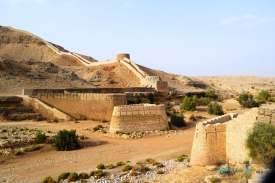
Makli is not a single mausoleum but an extensive necropolis on the edge of Thatta in Pakistan’s Sindh province. UNESCO’s registered name is the Historical Monuments at Makli, Thatta; the property covers about 10 square kilometres along a plateau roughly 6.5 kilometres long. The organization describes around half a million tombs and graves here. That scale changes the experience: visitors move through a landscape of funerary monuments rather than approaching one isolated landmark.
The necropolis is closely tied to Thatta’s former importance. UNESCO records the city as a capital of successive dynasties and later a place ruled by Mughal emperors, embellished between the 14th and 18th centuries. The monuments at Makli reflect the wider social and political history of Sindh over those centuries. Kings and queens are buried here, but so are governors, religious figures, scholars and others whose memorials form a much larger record of society than a royal cemetery alone could offer.