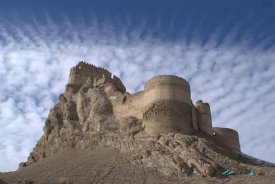
From below, the Citadel of Erbil appears as a continuous defensive edge above the surrounding city. Look more closely at what makes that edge, however, and the story changes: tall house façades contribute to the wall-like silhouette. Much of this visible fabric belongs to the nineteenth century, even though the mound beneath it contains evidence of far earlier settlement. Erbil’s landmark asks the eye to move between two scales of history, the buildings that can be seen and the layers that remain concealed.
The citadel stands on a tell, an artificial mound accumulated through repeated occupation and rebuilding. It is not a natural hill crowned by a single castle. Its shape helped determine how the settlement developed, and the late Ottoman pattern of alleys remains an important part of its character. World Heritage inscription in 2014 recognized this combination of archaeological depth and surviving urban form. Calling it simply a fortress risks overlooking the neighbourhood within the outline.