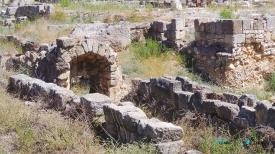
Choirokoitia is a Neolithic settlement on the slope of a hill in Cyprus’s Larnaka District, partly enclosed by a bend of the Maroni River. It lies about six kilometres from the southern coast. The setting is more than a scenic backdrop: the hill, water and approach routes formed part of the village’s design. The settlement occupied about three hectares at its greatest extent, according to UNESCO, and its remains preserve evidence of an organised community rather than a temporary camp.
The Cyprus National Commission for UNESCO says the settlement was founded toward the end of the seventh millennium BCE. UNESCO describes occupation from the seventh to the fifth millennium BCE and places Choirokoitia among the most important prehistoric sites in the eastern Mediterranean. It represents the Aceramic Neolithic, before pottery became part of the local archaeological record. The Commission notes that settlers came from the neighbouring mainland and developed a Neolithic culture on the island; the exact movement of people and the course of cultural exchange remain subjects for archaeological research.