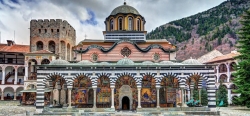
Boyana Church, dedicated to Saints Nicholas and Panteleimon, stands in the Boyana district on Sofia’s outskirts, near the foothills of Vitosha. Its modest exterior can make the first impression deceptive: the UNESCO property consists of three connected buildings from different periods, and the interior preserves some of Bulgaria’s best-known medieval wall paintings. It is both a religious monument and a carefully controlled museum visit. The main reason to come is not scale, but the chance to see how a small church grew over centuries and how layers of painting record changing artistic and devotional practice.
The Bulgarian Ministry of Tourism and the church’s own visitor site identify the monument as a museum affiliate of Bulgaria’s National History Museum, while UNESCO records it as a World Heritage property. The distinction matters for planning: this is not an unrestricted parish interior where visitors can wander at any time. Access is organized to protect sensitive frescoes, and the medieval rooms are entered in short, timed visits. The church is an intimate site, so admission rules shape the experience as much as its location or architecture.