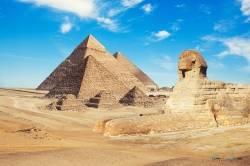
At Dahshur, south of the better-known Giza plateau, the Bent Pyramid rises with an outline unlike the familiar straight-sided monuments of Egypt. Its lower slopes climb steeply before changing to a gentler angle near the top, giving the structure its modern name. Rather than a decorative effect, that kink records a decision made during construction. Built for King Sneferu, the first ruler of Egypt’s Fourth Dynasty according to the Egyptian Ministry of Tourism and Antiquities, the pyramid offers a rare view of experimentation as it happened, set within a broader royal landscape that helped shape later pyramid design.
The Ministry’s Arabic and English monument pages explain that work began at an angle of about 55 degrees. The builders later adjusted the slope to about 43 degrees after the load of the stone blocks created instability, according to the official account. The visible change produces the pyramid’s bent profile. It is important to treat this as the ministry’s explanation rather than a measurement visitors can infer from appearance alone: the monument’s shape is a physical record, while the precise engineering sequence comes from archaeological and conservation interpretation.