Thyssen-Bornemisza Museum in Madrid: collection, history and visit guide
A third point in Madrid’s Art Triangle
The Museo Nacional Thyssen-Bornemisza stands at Paseo del Prado 8, between the Prado Museum and the Reina Sofía in central Madrid. Together, the three institutions are known as the city’s Art Triangle, but the Thyssen offers a different kind of encounter: a single collection assembled across generations, with works that trace Western painting from the late thirteenth century to the late twentieth. For visitors trying to decide which museum to add to a Madrid itinerary, its range makes it a useful bridge between the Prado’s historical holdings and the Reina Sofía’s focus on modern and contemporary art.
The collection occupies the Palacio de Villahermosa, a historic building adapted for museum use by architect Rafael Moneo. The museum opened in October 1992, adding a major cultural destination to the Paseo del Prado. The address is convenient for walking between the three museums, yet the Thyssen is substantial enough to deserve its own time rather than a rushed detour. Its route can be followed chronologically, or visitors can use thematic itineraries and temporary exhibitions to approach paintings through subjects such as landscape, music or fashion.
From a family collection to a public museum
The Thyssen-Bornemisza collection began with Heinrich Thyssen-Bornemisza, who assembled paintings from the late 1920s onward. His son Hans Heinrich continued the project after 1948, strengthening the Old Master holdings and extending the chronology into modern art. The family collection was first displayed at Villa Favorita in Lugano, Switzerland, but eventually outgrew the available space. In the 1980s, the baron considered a new home for it; his Spanish wife, Carmen Cervera, helped lead him toward Madrid.
In 1988, the baron and the Spanish state agreed to place 775 works in Spain on loan with a view to a later sale. Rafael Moneo converted the Palacio de Villahermosa to house them, and the museum opened in October 1992. In June 1993, the Spanish state acquired the core collection. The museum’s official history describes this sequence as an effort to keep the collection together and to complement works less represented in Spain’s public museums. The result was not simply a prestigious new building: it brought a broad survey of Western painting into a national collection and strengthened the cultural axis at the heart of Madrid.
Seven centuries of Western painting
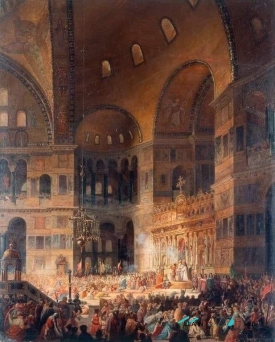
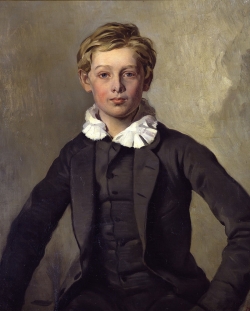
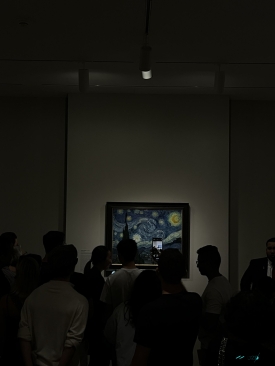
The permanent collection moves across eras and schools, from early Italian painting and the Renaissance through Baroque art, the nineteenth century and modern movements. The museum’s recommended first-visit route begins on the second floor and follows the room numbers downward, allowing visitors to travel chronologically toward the ground floor. Among the artists highlighted by the museum are Dürer, Caravaggio, Rembrandt, Monet, Degas, Van Gogh, Gauguin, O’Keeffe, Hopper and Picasso. That breadth makes the Thyssen especially valuable for seeing styles and transitions side by side.
The museum presents more than one collection within the same visit. The Thyssen-Bornemisza collection occupies the upper floors, while the Carmen Thyssen collection is on the ground floor; temporary exhibitions may use the ground floor, level minus one and selected rooms upstairs. Carmen Thyssen’s works entered through a separate family collection and long-term arrangements, so the name on the museum does not mean every object belongs to one single historic group. Check the display information if a particular painting or temporary exhibition is a priority: gallery rotations, loans and changing exhibitions mean an object’s location can vary.
How to make the most of your visit
For a first visit, the museum estimates roughly two and a half hours to explore the collection at a comfortable pace. Add about 50 minutes if you also want to see the temporary exhibition on the ground floor. A shorter route of around an hour and a half can focus on selected highlights; the museum recommends its audio guide and offers thematic routes for visitors who prefer to follow a subject rather than a timeline. These estimates are planning aids, not a required pace. The best visit leaves room to pause in front of works that catch your attention.
Photography and video are permitted without flash except where a sign indicates otherwise. The museum also allows drawing in galleries with graphite pencil; painting and other techniques require prior authorization for approved copying activities. Families can plan around the museum’s resources for children, while visitors who need a step-free route should review its accessibility information before arrival. The large building can take longer to navigate than expected, so check the floor plan and decide whether you want to see the permanent collection, Carmen Thyssen rooms, a temporary show or some combination of them.
Current hours, tickets and free periods
For the winter schedule, which runs from September 1 through June 30, the museum is open Tuesday to Friday and Sunday from 10 a.m. to 7 p.m., Monday from noon to 4 p.m., and Saturday from 10 a.m. to 11 p.m. Summer hours from July 1 through August 31 extend Tuesday to Friday until 9 p.m. The museum is closed on January 1, May 1 and December 25. As of the current published tariff, general admission is €14; reduced tickets for students and people over 65 are €10, and visitors under 18 enter free. Check the official page for eligibility details and any changes before buying.
There are two distinct free-entry periods: Mondays from noon to 4 p.m., when the permanent collection is open, and Saturdays from 9 to 11 p.m., when selected temporary exhibitions on the ground and minus-one floors are free. These arrangements are sponsored and can be subject to the available capacity. A timed ticket is not normally required for the permanent collection, but the ground-floor temporary exhibition has limited capacity and may require a selected time. Last admission is 30 minutes before closing. A combined Art Walk pass also offers one visit to the Thyssen, Prado and Reina Sofía within a year; verify the current price and what exhibitions it includes.
A collection that rewards a second look
The Thyssen-Bornemisza is not just an extra stop between two better-known museums. Its strength is the way it brings a broad sweep of Western painting into a manageable sequence, then adds a second perspective through the Carmen Thyssen collection and rotating shows. Visitors can come for a particular artist and leave with a clearer sense of the transitions between periods, or simply follow the rooms and let unexpected paintings set the pace.
Before setting out, check the museum’s current hours, ticket conditions, exhibition listings and any access notices. The free Monday and Saturday periods do not cover the same galleries, and temporary exhibitions change, so confirm what is on view for your date. Starting upstairs and following the room numbers downward provides an easy chronological structure; allowing time for a break and a closer look makes the experience less like a checklist. In the centre of Madrid’s museum district, the Thyssen is a place to see how a private family collection became a public story spanning seven centuries of art.