JW Marriott Panama: a Punta Pacífica hotel with three histories
A tower above Panama City's waterfront
The JW Marriott Panama rises from Punta Pacífica, the seaward edge of Panama City's modern business district. Its curved profile belongs to a skyline in which towers face both the Pacific and the older neighbourhoods farther west. For a traveller, the building is a useful vantage point on the city's recent growth, but it also carries a more complicated hotel history than its present name suggests. Start with the location: Marriott's current address is Calle Punta Colón, Punta Pacífica, in the San Francisco district of Panama City. It is not in Chiriquí province.
From the hotel, the bay and the high-rise city take up much of the view. The operator describes ocean-facing rooms and private balconies, outdoor pools, restaurants, meeting spaces and a fitness centre. These are current hotel facilities, not a promise that every space is open to any passer-by or included in every booking. Guests should check room categories, restaurant reservations and any restrictions directly with Marriott. The property also advertises pet-friendly accommodation, while its booking rules set limits and fees that need checking before travel.
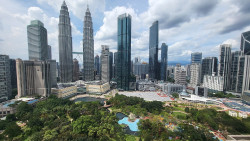
Punta Pacífica is not the colonial Panama of stone lanes and plazas. It is a district of towers, offices, apartments and busy roads shaped by the city's role in regional finance and travel. That contrast makes the hotel an interesting base for a deliberate itinerary: spend time in the contemporary waterfront landscape, then go elsewhere in the capital for the old city, canal history or neighbourhood life. The views alone do not tell the whole story of Panama, and a hotel address is never a substitute for understanding the streets around it.
Three names, one hotel
The property opened in 2011 under the Trump Ocean Club name, according to the Panamanian newspaper La Prensa and a later statement from its owner. That earlier brand still appears in old photographs and search results. In March 2018, during a dispute over management, the hotel ceased operating under the Trump name and became The Bahia Grand Panama. The name change was about the hotel operation; the tower itself remained in place. It is easy to mistake a historical name for a current booking option, so the dates matter.
In June 2018, Ithaca Capital announced an agreement for Marriott to operate the hotel under its JW brand. La Prensa reported the formal change on 25 September that year. This is the point at which the present name became the useful one for visitors. The events were part of a commercial and legal conflict that attracted international attention. A travel account need not turn the entire dispute into its subject, but it should not erase it either: the building's identity changed while Panama City continued to grow around it.
The hotel sits within a larger tower. That distinction matters when reading old reports that refer interchangeably to the building, its residences and its rooms. The current Marriott page is the reliable source for present guest services; reporting from 2018 explains the transition between brands. Neither source proves that a remembered bar, shop or attraction inside the building still operates. If a listing is not on the hotel's current dining and experiences pages, treat it as unconfirmed rather than building a day's plans around it.
What a stay can actually include
Marriott currently highlights MASI, a restaurant built around ceviche and local touches, and Azul, a poolside restaurant with a view across the city. It also lists Cava 15 and other on-property dining options. These descriptions help a visitor choose between an evening at the hotel and time elsewhere in town. They do not establish menus, table availability or access conditions for non-guests on a particular day. The sensible practical step is to confirm the restaurant and book if needed, especially when a trip coincides with an event.
The hotel's outdoor pools, fitness facilities and meeting rooms speak to a mix of leisure and business visitors. Marriott's current page mentions renovation work affecting some areas from 11 July, without making a permanent opening claim for every amenity. Ask which facilities are available during the dates of a reservation. A high floor or balcony also depends on the room booked, not merely on the hotel's position by the water. Such checks may sound prosaic, but they separate the experience a guest can purchase from the view suggested by a photograph.
Panama City rewards a trip beyond the hotel. Official city and national tourism resources can help plan visits to the historic Casco Antiguo, the Panama Canal visitor facilities and public waterfront routes according to current access conditions. This hotel is a starting point rather than an all-purpose guide to the capital. Leave time for traffic, verify opening information with each attraction and avoid assuming that a short straight-line distance across the skyline means a quick journey on the street.
Arrival, booking and the right expectations
Marriott gives the address as Calle Punta Colón, Punta Pacífica, corregimiento de San Francisco, Panama City, and lists a local telephone number of +507 215-8800. Its present booking page states check-in from 3 p.m. and check-out by noon. The hotel says it does not provide its own airport shuttle; transport and parking options should be checked at reservation time. Published prices for rooms, parking and extras can change, so a fixed rate in a travel story would be less useful than the operator's live terms.
For anyone researching the building, the best method is to keep its names in chronological order: Trump Ocean Club when the hotel opened in 2011, Bahia Grand during the 2018 transition, JW Marriott Panama since September 2018. That simple sequence prevents an obsolete guide from sending a visitor to a service that no longer exists. It also keeps the architecture from becoming a stand-in for a political argument. What stands at Punta Pacífica today is a working hotel in a changing city, and its current operator is the place to verify practical details.
The building's appeal is the meeting of a Pacific outlook and an unusually visible chapter of Panama City's recent hotel history. Look outward from the tower, but also look past the tower: to the neighbourhoods, public spaces and older layers that make the capital more than its skyline. A well-planned stay uses the hotel for what it verifiably offers and treats each excursion as its own journey. That is a more accurate way to read Punta Pacífica than relying on an old name or a promise attached to a dramatic photograph.