Hagley Park and Christchurch Botanic Gardens guide
A green centre with more than one history
Hagley Park and the Christchurch Botanic Gardens sit so close to the centre of Ōtautahi Christchurch that a visitor can pass from streets into trees almost without noticing a boundary. The open lawns and formal plant collections look like one continuous green space, but they invite two different kinds of walk. Hagley is a large public park of 165 hectares, made for movement, sport and gatherings. The Gardens are a more closely tended living collection. Together they reveal how a city has used land, water and plants to imagine itself since the nineteenth century, while their history reaches further back.
Christchurch City Council’s conservation plan begins before colonial park making. It describes the Ōtākaro river corridor and nearby places as part of Ngāi Tahu life, travel and food gathering. The park’s management plan records Ngāi Tahu people helping the Deans brothers travel upriver in 1842 and notes the later colonial land purchase. That evidence should change the way the landscape is read. The grounds did not begin as empty space waiting for a park. Waterways, wetlands, vegetation and relationships with the land already had names, uses and histories before English-style lawns were laid out.
In the 1850s, the colonial city reserved Hagley Park for public recreation. The council still describes it as the heart of Christchurch, divided into North and South Hagley by Riccarton Avenue. A section was later set aside for the Botanic Gardens. One English oak planted on 9 July 1863 to mark a royal wedding is treated as their foundation date. The tree tells only one part of the story, but it captures the era’s confidence in planting a new city. Today the contrast between imported trees and New Zealand native collections offers a more searching account of what the place became.
Walking through park, gardens and water
Begin with Hagley’s scale. The council lists a 4.5-kilometre perimeter route in North Hagley and a 3.7-kilometre route in South Hagley, with broad paths for walking and cycling. Playing fields, the golf course and other recreational facilities make this an active landscape rather than a silent ornamental one. Its character changes through the day as runners, families and teams use the same open ground differently. The park is open at all hours, but that does not mean every car park or facility is open through the night. Check signs where a path crosses a sports field or event area.
The Botanic Gardens reward a slower pace. The council’s guide points visitors toward old trees, the Central Rose Garden, the New Zealand Gardens and seasonal plantings. In spring, displays of daffodils signal change; in summer, roses and other flowering collections become more prominent; autumn brings leaf colour. The appeal is not a single flower that can be guaranteed on a given day. It is the sequence of living collections, each dependent on season and weather. Pick up a map at the Visitor Centre or use the council’s walking guide to choose a route rather than trying to see everything in one sweep.
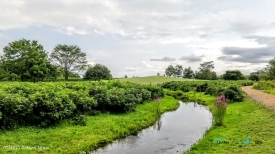
Follow the water as well as the beds. The conservation plan traces the transformation of a wet area into Victoria Lake and records how a major international exhibition in 1906–07 reshaped parts of the park. Those changes left a designed landscape, not untouched nature. A visitor walking beside lake and river can compare the open spaces with the more intimate garden paths. The view invites a question that a simple picnic itinerary might miss: which features were preserved, which were planted, and whose uses of the land each generation chose to make visible?
Glasshouses, collections and a living institution
The Gardens’ conservatories carry their own history. Cuningham House opened in 1924 as a grand tropical display house, funded by a local bequest. It is a heritage building, and the council’s current notice says it is closed for restoration. A selection of its tropical collection is being shown in Townend House during the work. Do not arrive expecting access to the famous Cuningham interior in late 2026. Other conservatories and collections may be open, but verify the day’s notices because a living garden changes with conservation work as well as with the weather.
The council’s plant descriptions make the variety concrete: native New Zealand gardens sit alongside formal roses, old trees, succulents and seasonal display houses. The Curator’s edible garden connects ornamental planting with food growing, while the glasshouses show what careful shelter makes possible in a South Island climate. These are not merely attractive backgrounds. Staff manage, propagate, label and interpret plants for the public. A short guided walk can reveal more than a hurried circuit, especially for visitors who want to know why a collection is arranged as it is.
Programmes also make the grounds a public classroom. The council lists guided tours and changing events, from horticultural activities to gatherings at the New Zealand World Peace Bell. Dates and meeting places vary, so the events calendar is more useful than a general promise that something will happen during a visit. Even without an event, the Gardens give travellers a way to read Christchurch through its choices of species and design. Leave time to stop at labels and to notice where a native planting alters the visual language of the older colonial park.
Practical planning for spring 2026
Admission to the Botanic Gardens is free. The council’s published timetable gives opening from 07:00 to 20:30 in October and from 07:00 to 21:00 from November through February; conservatories generally run 10:00–16:00. The Visitor Centre and ilex Café are listed from 09:00 to 17:00 between September and May. Hagley Park itself is open around the clock. Recheck the council’s live notices for restoration, events or holiday changes, especially if a particular glasshouse is the purpose of the trip.
There are paid car parks serving both halves of Hagley, including the Riccarton Avenue and Armagh Street approaches near the Gardens. The council limits its metered spaces to three hours and gives those two car parks seasonal gate times; in October they close at 20:30, and in November at 21:00. Parking charges and payment methods are posted on the council page. Walking in from central Christchurch can be simpler and gives a better sense of how close the park is to the city. Once inside, follow marked routes and check the council map for cycling restrictions in garden areas.
A good visit need not choose between recreation and reflection. Walk a stretch of Hagley’s broad avenues, then slow down among the Gardens’ collections. The shift in pace reveals a place shaped by Ngāi Tahu histories, colonial planning, horticultural work and contemporary conservation. The lawns can look timeless from a distance. Up close, names, waterways, old plantings and restoration notices show that this green heart of Christchurch is still being interpreted and cared for.