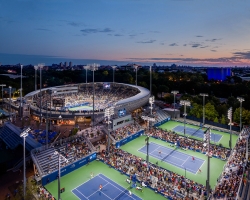
About All England Lawn Tennis and Croquet Club
Wimbledon is known around the world for its grass-court tennis championships, yet the place visitors can explore is more specific: the grounds of the All England Lawn Tennis and Croquet Club (AELTC), in southwest London. The club is a private members’ institution, not an everyday public park. Visitors can book access to the Wimbledon Lawn Tennis Museum and a guided tour of the grounds, but the route and opening schedule depend on the date. Understanding that distinction makes it easier to plan a visit that goes beyond the familiar tournament name.
From a small tournament to a global event
The AELTC traces its origins to 1868, when it was founded as a croquet club. In 1877 it staged the first Lawn Tennis Championship at its original Worple Road ground. The event began with 22 male entrants; Spencer Gore became the first champion before a crowd of about 200. Tennis soon eclipsed croquet in the club’s public identity, though the name retains both sports. This early history helps explain why Wimbledon is at once a tournament, a club and a working venue with traditions shaped over generations.
As the Championships grew, the Worple Road site could no longer accommodate demand. The club moved to Church Road in 1922, where Centre Court became the focal point of the new grounds. The official history presents the move as a major turning point, not just a relocation. The current site has continued to evolve, with courts and facilities adapted for players, broadcasters and spectators while retaining the grass-court character for which the Championships are known. The grounds therefore tell a story of continuity and change in the same landscape.
The AELTC and The Championships are closely linked but not interchangeable. The club operates the grounds and stages the annual tournament, while the Championships are a major sporting event held there during the British summer. Between tournaments, the site remains a club rather than a continuously open attraction. Museum visits and tours are the main public-facing options outside event periods; access to individual courts or restricted areas is not guaranteed. The club’s schedule and rules, rather than the tournament’s fame, determine what a visitor can see on a particular day.
Museum and guided tour
The Wimbledon Lawn Tennis Museum presents the history and traditions of the Championships through objects, displays and audio guides. A museum-only ticket includes a short, timed visit to Centre Court for photographs, according to the current visitor FAQ. A combined Museum and Tour ticket adds a 90-minute guided walk through the grounds with a qualified Blue Badge guide. The route can include areas used by players and broadcasters, but the club says all tour locations are subject to availability. The public tour is in English; the museum audio guide is available in several languages, including French and Spanish.
At the time of review, the museum and shop are listed as open daily from 10:00 a.m. to 5:00 p.m. between October and March, with last museum entry at 4:00 p.m. From April through September, hours are 10:00 a.m. to 5:30 p.m., with last entry at 4:30 p.m. All visits must be booked in advance online, and closure dates can change. The official booking page is the place to confirm availability and any date-specific changes. Comfortable shoes and weather-appropriate clothing are sensible because parts of the tour are outdoors and walking is involved.
Arrive at Gate 4 on Church Road for museum and tour admission. The club’s FAQ says there is no general public parking at the site; limited provision for Blue Badge holders is by arrangement and availability. Southfields on the District line is about a 15-minute walk from the grounds, while Wimbledon station, served by the District line, South Western Railway and trams, is roughly 20 minutes on foot. The 493 bus links the stations with the museum entrance. Check the route planner and current service information before travelling, especially on tournament dates.
Planning around the Championships
The tournament changes the neighborhood as well as the grounds. Demand for transport rises, road arrangements can be altered and public parking is restricted. The AELTC recommends using public transport and provides a dedicated journey planner for visitors. Its travel page gives walking distances and notes that a special Championships bus may operate between Wimbledon station and the grounds during the event. Those arrangements are seasonal, so do not assume that tournament-day services or prices apply to an ordinary museum visit. Confirm the schedule for the exact day you plan to go.
Wimbledon’s history is inseparable from grass tennis, but the experience is not limited to watching matches. The museum places objects and traditions in context; the tour helps visitors read the grounds as a workplace used by athletes, staff and broadcasters. The club’s private status also means that the tour is a managed introduction, not permission to wander freely through every court. For tennis fans, that controlled access offers a rare look at a famous setting while respecting that it is still an active institution.
A visit with a sense of place
Southwest London rewards a slower approach: choose the museum, tour or tournament first, then build the rest of the day around the actual opening and transport details. The AELTC’s story—from a croquet club to the first Championships in 1877 and the Church Road move in 1922—gives the grounds depth beyond their televised summer image. Even outside the fortnight of competition, Wimbledon can be understood through the architecture of its courts, the museum’s collections and the rituals that have accumulated there.
Before setting out, verify the date-specific booking, seasonal hours, last entry and route at the official Wimbledon site. A pre-booked visit is essential, and tour areas may vary. With those practical details settled, visitors can focus on what makes the place distinctive: not simply its global sporting reputation, but the relationship between a private club, a public-facing museum and a living tradition that has adapted without abandoning its grass-court roots.